The Ghana Maritime Authority (GMA) has intensified efforts to ratify the International Labour Organisation’s Seafarers’ Identity Documents Convention, 2003 (C185), a move set to eliminate decades of travel restrictions and professional hurdles for Ghanaian maritime workers.
The Convention introduces a specialised biometric “passport” for sailors known as the Seafarers’ Identity Document (SID).
This high-tech tool ensures that Ghanaian seafarers can move through foreign borders, such as those in the US, UK, China, or Brazil seamlessly.
Using digital fingerprints and photos, the C185 allows foreign border officials to instantly verify legitimate maritime workers, facilitating essential shore leave and crew rotations.
Sanctions and Professional Consequences
Ghana’s inability to ratify the convention, which originally came into force nearly two decades ago, has led to severe professional consequences.
Major maritime hubs like Brazil have already moved to enforce the treaty strictly, imposing what are effectively sanctions on seafarers from non-ratifying nations.
Currently, Ghanaian sailors serving on ships plying Brazilian ports are denied entry unless they possess a specific one-year visa, a requirement that does not apply to seafarers from countries that have already adopted the biometric SID.
Stakeholder Consultation
Speaking at a stakeholder engagement in Accra on Monday, March 30, 2026, the Director-General of the GMA, Dr Kamal-Deen Ali (Naval Capt Rtd), expressed serious concern over the 23-year delay since the convention’s initial adoption.
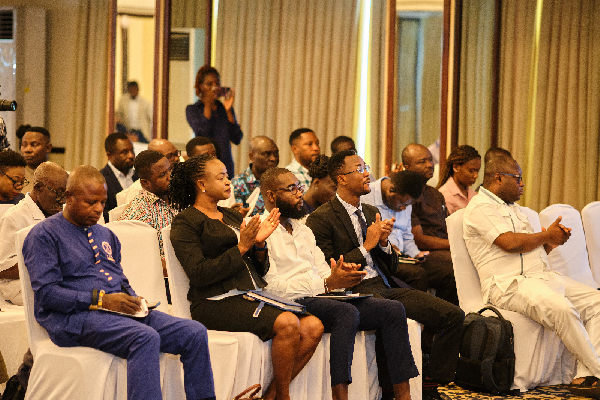
The forum brought together representatives from the Attorney General’s Department, the Ghana Merchant Navy Officers Association, Marine Police, National Union of Seamen, Port and Allied Workers, Academia, and various Ministries, Departments, and Agencies.
Dr Ali noted that non-ratification has resulted in tangible challenges, including instances where current Ghanaian identity documents were not recognised abroad, leading to restricted access and operational inefficiencies.
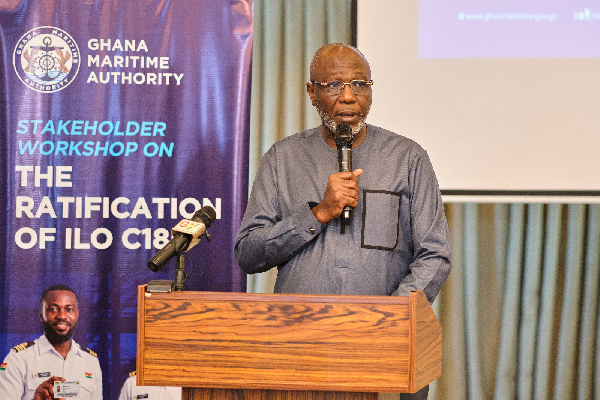
“These challenges have not only affected our seafarers but also the reputation of the country’s maritime sector, hence the urgent need to address the situation,” he said. He added that the “resetting agenda” currently underway provides the necessary momentum to ensure local sailors maintain their competitive edge.
Alignment
The Minister for Transport, Joseph Nikpe Bukari, in a speech read by the Director of General Administration at the Ministry, Richard Fidieley indicated that the government is positioning the maritime sector as a pathway to curb unemployment.
This requires Ghana to align its systems with international standards. “Our ambition extends beyond the region to the global stage,” Nikpe said, stating that ratification would create a foundation for smoother crew change processes and align national security with international best practices.
Industry Impact
The practical frustrations of this delay were underscored by the Country Director for Bernhard Schulte Shipmanagement (BSM), Capt Joshua Addo.
He revealed that Ghanaian seafarers currently face de facto sanctions in Brazil, where the one-year visa rule has become expensive and logistically grueling.
The process involves demanding notarised bank statements and original documents sent via DHL from Brazil to Ghana.
“Nearly 25 percent of seafarers are likely to call at Brazilian ports during their tenure, and ratification would immediately replace this cumbersome process with a globally recognised biometric identity,” Capt Addo said.
The President of the Maritime Professionals Club, Capt Teddy Mensah, highlighted the humanitarian aspect, noting that sailors are frequently denied the right to go ashore for “freshening up” after months at sea.
“This confinement significantly affects the mental well-being of the crew, a situation the new identification system aims to rectify,” he said.
Parliamentary Assurance
A member of the Foreign Affairs Committee of Parliament and MP for Kintampo North, Joseph Kwame Kumah expressed sadness regarding the difficulties faced by Ghanaian sailors in Brazil, describing the situation as a regrettable bottleneck for the nation’s workforce.
He assured stakeholders of the committee’s unwavering commitment to prioritise the document once it is approved by Cabinet and laid before the House.
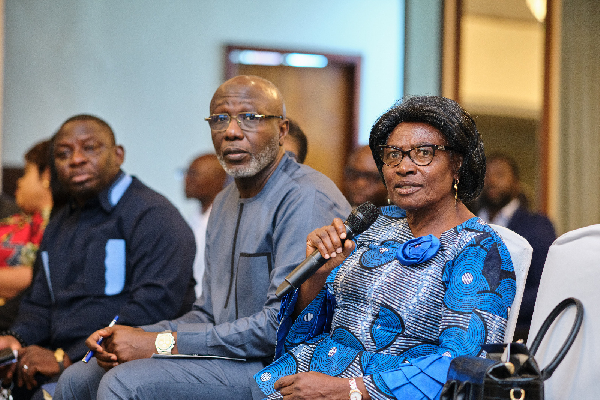
“Parliament will take a serious look at this document to ensure a speedy ratification, addressing the hurdles faced by our maritime workers,” he said.
Kumah further urged the GMA to ensure the new system encompasses trawler operators and fishermen, ensuring no one in the industry is left behind as the Ministry of Transport works through its current itinerary of maritime bills.
Business News of Tuesday, 31 March 2026
Source: www.ghanaweb.com
GMA intensifies efforts to ratify ILO Convention C185
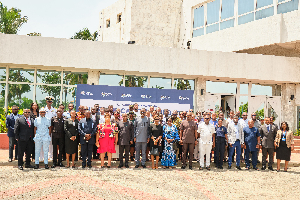 The team at the event in a group photograph