The District Chief Executive for Shai Osudoku District in the Greater Accra Region, Ignatius Godfred Dordoe, is appealing to the Minister for Food and Agriculture and the National Food Buffer Stock Company to urgently intervene to help purchase large quantities of locally produced rice that remain unsold in the district.
According to Dordoe, rice farmers within the Osudoku enclave are currently facing a glut as significant volumes of the commodity remain stored in silos due to the lack of ready markets.
Speaking on the Accra-based Class 91.3 FM Morning Show on Monday, March 2, 2026, he said the issue of market access was raised during a recent visit by the agriculture minister to the area.
“Recently, the Minister of Agric was in the area, and one of the issues they put before him was access to the ready market. We have one of the best rice at Osudoku, good quality rice.
If they give it to you, you will put Thailand aside,” he stated.
Dordoe explained that although rice produced in the district is of high quality, local farmers are unable to compete with cheaper imported rice on the market.
According to him, the price difference makes it difficult for buyers, particularly those in the food industry, to patronise locally produced rice.
“The issue is that usually those that are imported into the country are cheaper than what we produce.
"Ours is going for around GHS 600 for a bag, and the imported ones are going for GHS 400.
"So, for those in the food industry, you can’t compete,” he noted.
The DCE therefore urged the National Food Buffer Stock Company to step in and support farmers by purchasing the excess rice currently sitting in storage facilities.
“So, we need to provide special markets or put in interventions for them.
Other than that, there is a lot of rice in silos as we speak now, and I want to use this platform to speak to Buffer Stock to come in and put in interventions for our farmers,” he appealed.
Dordoe further revealed that the district has about 4,000 hectares of rice under irrigation, allowing farmers to cultivate the crop twice each year and produce large quantities per season.
“As we speak right now, we have about 4,000 hectares of rice under irrigation.
"Can you imagine the amount of rice we produce just in one season, and we cultivate it twice in a year?” he added.
He stressed that without urgent intervention to create reliable markets for the produce, farmers in the Osudoku enclave will continue to face challenges despite their high production capacity.
Business News of Sunday, 8 March 2026
Source: classfmonline.com
Food Glut Crisis: Shai Osudoku DCE seeks immediate action from Agric Ministry
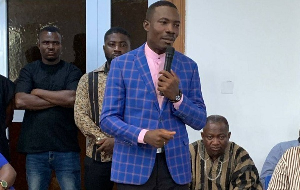 Shai Osudoku DCE, Ignatius Godfred Dordoe