The recent 28.63 percent reduction in producer price for cocoa has reignited debate over the country’s ability to shield its key revenue earners from market shocks, with the Co-Chair of Ghana Extractive Industries Transparency Initiative (GHEITI), Dr Steve Manteaw, warning that the economy remains dangerously exposed without a functioning price stabilisation mechanism.
He cautioned that the same structural weakness now affecting cocoa could equally undermine gold revenues if global prices retreat, arguing that the country has failed to institutionalise buffers to manage commodity volatility despite its long dependence on extractive income.
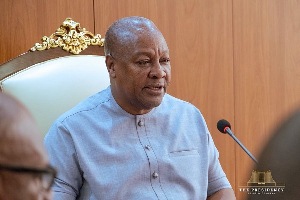
In a social media post contributing to ongoing public discussions on developments in the cocoa sector, Dr Manteaw urged policymakers to replicate the discipline applied in the petroleum sector.
“We must do for other commodities what we have done so brilliantly for oil,” he wrote, advocating the establishment of a stabilisation fund to set aside excess earnings above projected revenues during boom periods to cushion the economy in downturns.
Ghana operates a stabilisation arrangement for petroleum revenues under the Petroleum Revenue Management framework, designed to smooth budgetary shortfalls when oil prices fall.
However, no comparable statutory mechanism exists for cocoa or gold – two of the country’s leading foreign exchange earners.
Economists note that, in the absence of such buffers, commodity downturns tend to result in fiscal pressures, often leading to abrupt policy adjustments that affect producers and government spending alike.
$8M Romance Scam: 9 transactions prosecutors link to Abu Trica
Dr Manteaw’s intervention comes at a time when policymakers are grappling with sustaining export revenues amid shifting global commodity cycles and tight fiscal conditions.
Meanwhile, a Technical Advisor at the Ministry of Finance, Dr Theo Acheampong, said the extraordinary cocoa price windfall witnessed between 2023 and 2025 has run its course. The rally, triggered largely by supply disruptions and poor harvests in major producing countries, pushed international prices above US$10,000 per tonne at its peak – marking levels not seen for decades.
He indicated that the market is likely to correct significantly, with prices expected to moderate at between US$3,500 and US$4,000 per tonne for the remainder of 2026… albeit still above historical averages.
According to him, credible burden-sharing across the cocoa value chain must begin at the top.
He noted the recent decision to pass 90 percent of the gross Free on Board (FOB) price to farmers compared with 70 percent previously, as part of efforts to cushion producers from volatility.
Beyond pricing reforms, he emphasised the need for rigorous cost rationalisation at the Ghana Cocoa Board (COCOBOD) – including a review of compensation structures, a reduction in discretionary and non-essential expenditure and a scaling back of quasi-fiscal commitments such as cocoa road projects.
Savings, he suggested, should be redirected toward productivity-enhancing support and extension services for farmers. Some of these measures, he noted, form part of ongoing structural reforms under the country’s programme with the International Monetary Fund.
Dr Acheampong added that repeated cycles in oil, cocoa, and gold underscore a longstanding lesson: reliance on primary commodity exports offers limited insulation against external shocks.
“The lesson oil and gas, cocoa and gold continue to demonstrate is simple; we cannot build a robust economy on primary commodity exports alone,” he said, stressing the need for deeper value addition, industrial expansion and productivity gains within agriculture and manufacturing.
Auto dealers respond to 15% price cut announcement
Business News of Thursday, 26 February 2026
Source: thebftonline.com
Absence of price stabilisation fund leaves cocoa and gold exposed - GHEITI
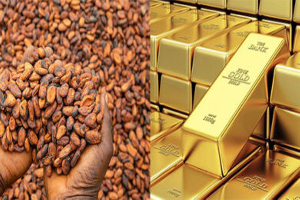 A collage of cocoa beans and bars of gold