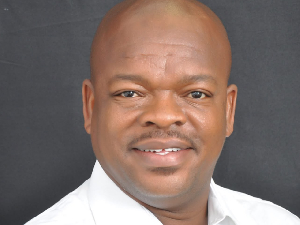
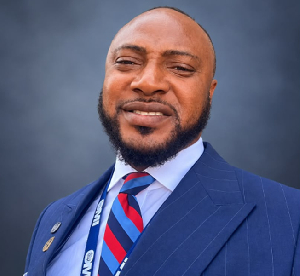
At the UNIDO Climate Adaptation and Industrial Resilience Forum 2026 in Vienna, Ghana’s Minister of State for Climate Change and Sustainability, Seidu Issifu, called for urgent global action to turn climate commitments into concrete measures to strengthen industrial resilience.
Addressing delegates from governments, industry, and development institutions, the Minister highlighted escalating climate impacts, including droughts, floods, and rising temperatures, which threaten lives, livelihoods, and development gains.
He warned that the widening adaptation finance gap is placing industries, particularly in vulnerable economies, at the frontline of climate risk.
“Adaptation is not a side agenda for Ghana; it is central to our development, stability, and competitiveness,” the Minister stressed.
Citing domestic challenges, he noted that increasingly frequent and severe climate shocks continue to disrupt communities, infrastructure, and productive systems.
According to the Ghana Statistical Service January 2026 report, approximately 13 million Ghanaians are food insecure, underscoring the urgency of scaling up adaptation efforts.
The Minister outlined key institutional reforms, including the establishment of the Office of the Minister of State for Climate Change and Sustainability (OMCCS) under the Presidency in 2025 to provide national leadership, ensure cross-ministerial coordination, and drive climate action.
He also highlighted two major mechanisms to translate national leadership into local action; the creation of a Climate Change and Sustainability Hub, envisioned as a national center of excellence to drive evidence-based planning, innovation, and climate investment matchmaking; and the institutionalization of Climate Change and Sustainability Units across all Municipal and District Assemblies to integrate climate adaptation into local governance.
Describing this as a “whole-of-government” and “whole-of-nation” approach, the Minister emphasized that climate resilience is closely aligned with Ghana’s broader economic transformation agenda, including the government’s 24-Hour Economy initiative.
“When production stops, incomes fall. When supply chains break, prices rise. When infrastructure fails, services collapse,” he said, highlighting the need to protect households and productive systems through adaptation.
The Minister praised collaboration with UNIDO, noting the organization’s expertise in industrial development, eco-industrial parks, MSME support, and resilient value chains.
He urged countries, especially in the Global North, to translate commitments made at COP30 into tangible action. Ghana called for scaled-up climate finance, technology transfer, supportive policy frameworks, stronger global partnerships, and innovative financing solutions, including debt relief for vulnerable economies.
“With the right support, Africa can leapfrog to a low-carbon, climate-resilient economy, creating jobs, reducing poverty, and driving sustainable growth,” the Minister said.
In closing, he reaffirmed Ghana’s commitment to transforming COP30 promises into climate-resilient industries, green jobs, and sustainable economic growth, urging UNIDO, governments, development partners, and the private sector to fast-track national action plans and mobilize at least USD 100 billion annually for adaptation.
The forum marked a significant step in aligning global climate commitments with practical industrial solutions, with Ghana positioning itself as a strong advocate for resilient, inclusive, and climate-smart development.
Business News of Wednesday, 18 February 2026
Source: Office of Minister of State for Climate Change and Sustainability
Climate change adaptation is not a side agenda - Seidu Issifu
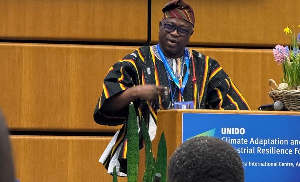 Seidu Issifu, Minister of State in charge of Climate Change and Sustainability