The cocoa sector is under mounting pressure as high producer prices, legacy forward sales, and a retreat by international buyers leave cocoa beans unsold and some farmers unpaid, the Ghana Cocoa Board head has said.
Chief Executive Dr Ransford Anertey Abbey said, at a press briefing, that the cocoa crop in the 2024–25 season was not financed through the long-standing syndicated loan structure but directly by buyers, countering claims that funding shortfalls stemmed from misused funds.
The shift followed COCOBOD’s inability in 2022 to fully service interest and principal on its cocoa bills, a move that weakened confidence among lenders and reduced appetite to finance subsequent crops.
Dr Abbey said the current strain was worsened by forward sales contracts signed at historically low prices. COCOBOD had committed to supply about 333,767 tonnes of cocoa at roughly GH¢41,600 per tonne, reflecting market conditions at the time.
When global prices later surged, buyers holding those contracts opted to finance the crop to protect their exposure.
That arrangement, Dr Abbey said, emerged out of necessity rather than long-term planning.
Market conditions have since turned sharply. Global cocoa prices have fallen, while Ghana’s farmgate price remains elevated.
COCOBOD paid farmers the equivalent of about GH¢80,640 per tonne, based on pricing decisions taken when exchange rates and global prices were significantly higher.
Cocoa is now trading on international markets at around GH¢64,000 per tonne or below.
“How do you expect a buyer to purchase cocoa at GH¢96,000 when the same cocoa is trading on the market at GH¢64,000 or lower?” Dr. Abbey said. “These are business decisions. Buyers will move to markets where prices are competitive.”
The mismatch has left some licensed buying companies holding beans without off-takers, while others have delivered cocoa but are yet to be paid.
Dr Abbey said COCOBOD has sold cocoa worth more than GH¢8.5billion so far, with a smaller portion still seeking buyers after some traders shifted purchases to cheaper origins.
COCOBOD has faced growing pressure from farmer groups in recent days over delayed payments and unpurchased beans.
Dr Abbey said the regulator is aware of the challenges and is working with government and industry stakeholders to stabilise the situation.
He also dismissed social media claims that funds meant for farmers had been diverted to vehicle purchases.
While acknowledging that pick-ups and other vehicles had been ordered, Dr Abbey said the acquisitions were funded from internally generated funds and intended to address severe operational gaps across cocoa-growing districts not financed from crop proceeds.
Beyond the immediate crisis, Dr Abbey said these difficulties highlight deeper structural weaknesses.
For more than three decades, syndicated loans required COCOBOD to pledge large volumes of raw cocoa as collateral, thus limiting the country’s ability to expand local processing and value addition. The government and the finance ministry are now developing a new funding model aimed at reducing reliance on raw bean exports.
The new structure is expected to take effect from the 2026–27 season. Until then, Dr Abbey appealed for patience from farmers, saying COCOBOD remains committed to settling all payments.
“This is their sweat. They deserve to be paid,” Dr Abbey said. “We understand the situation fully, and we are working to find a solution as quickly as possible.”
Cocoa prices settled sharply higher on Thursday after chocolate-maker Hershey forecast a better-than-expected outlook for 2026, easing concerns about cocoa demand and fuelling short covering in cocoa futures.
Understanding Ghana's stock market and how to invest | BizTech
Business News of Monday, 9 February 2026
Source: thebftonline.com
Cocoa Farmers' Arrears: COCOBOD blames legacy contracts, buyer retreat
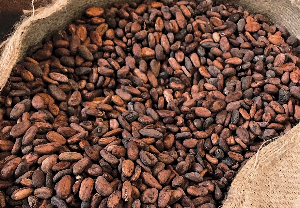 File photo of cocoa beans