GhanaWeb Feature by Ernestina Serwaa Asante
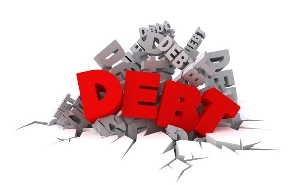
Following the launch of the Pan-African "Black Paper" on debt earlier in 2025, many have been left wondering why it was named the Black Paper. Is the paper itself black, or is it simply a symbolic title?
Before delving deeper into this conversation, it is important to understand that the Black Paper offers a decolonial framework for discussing Africa’s debt and broader economic challenges.
Unlike the traditional white papers produced by institutions such as the International Monetary Fund and the World Bank, this Black Paper argues that Africa’s debt crisis stems from colonial exploitation and not merely poor governance.
Africa's creditors must cancel the continent's debts – ITUC-Africa
It challenges existing development finance models, viewing them as remnants of colonial systems, and proposes a new roadmap for Africa’s financial sovereignty.
The goal is to transform the continent from a debtor to a net creditor.
Developed under the Stop the Bleeding Campaign, the paper explores Illicit Financial Flows (IFFs), colonial legacies, and climate financing across Africa.
The continent loses billions of dollars annually through IFFs, and for Africa to achieve self-sufficiency, these loopholes must be sealed.
“So, it’s being called a Black Paper as opposed to the typical white paper because we are trying to assert ourselves as Africans. We want to own our narrative and our continent. That’s why it’s called a Black Paper,” Dr Eunice Offei explained to GhanaWeb’s Ernestina Serwaa Asante.
AFRODAD chair calls for restorative justice as Africa's debt crisis deepens
Speaking on GhanaWeb TV’s BizTech, the researchers: Professor Godfred Bokpin, Dr Emmanuel Senanu, Dr Eunice Offei, and Dr Gabriel, emphasised that African leaders must pursue broader reforms to enhance the continent’s competitiveness on the global stage.
“We’re also making the point that if you look at what leaves the continent annually, compared to what we receive through borrowing, Foreign Direct Investment, portfolio flows, and aid — it’s minimal. What we lose through Illicit Financial Flows far outweighs what we gain,” Professor Godfred Bokpin said.
The paper also highlights how colonial powers continue to dominate negotiations involving African nations, a narrative, they said must be dismantled.
Furthermore, the researchers noted that although Africa contributes the least to global carbon emissions, it bears a disproportionate share of the climate crisis.
The climate finance directed to Africa often comes in the form of loans, adding to the already heavy debt burden faced by many African countries.
Data from the IMF and the World Bank shows that 22 African countries are currently in debt distress or at high risk of debt distress.
Multilateral lenders must support Africa's debt restructuring efforts - Ato Forson
Four nations, namely Chad, Ethiopia, Ghana, and Zambia, have already defaulted, while seven countries now spend more on debt interest than on education, and 25 spend more on debt interest than on health, according to UNCTAD’s 2023 report.
On Africa’s total public debt, it has surged to $2.14 trillion in 2024, up from $1.8 trillion in 2022.
External debt servicing is also projected at $88.7 billion in 2025, nearly matching the previous year’s figure of $89.4 billion.
Meanwhile, watch the latest edition of BizTech below:
Business News of Friday, 26 September 2025
Source: www.ghanaweb.com