Africa is adjusting to the new reality of US President Donald Trump’s tariffs, with countries on the continent facing some of the highest export charges.
But what could become a crisis is an opportunity for United States rival China, which has long courted African countries and is now offering them a lifeline.
“We (Africa) are going straight into the hands of China,” Nigerian economist Bismarck Rewane told CNN.
“That is the unfortunate outcome,” Rewane said of Africa’s expected further shift toward China, which has emerged in recent years as the continent’s largest bilateral trading partner.
Four African nations - Libya, South Africa, Algeria and Tunisia - face some of the steepest tariffs imposed by the Trump administration, with charges on exports ranging from 25% to 30%.
Eighteen other countries from the continent were hit with 15% levies, a modified tariff package released Thursday by the White House showed.
In April, when the US import levies were first announced, Trump pitched them as “reciprocal” and targeting countries that he said had trade deficits with the US.
But Trump instead based his tariffs on countries’ trade deficits with the United States – not the tariffs they charge.
South Africa, one of the continent’s powerhouses, challenged the imposition of a 30% tariff on its US-bound exports, saying Trump’s decision was not based on “an accurate representation of available trade data.”
China has offered to soften the impact of US tariffs on Africa, saying in June it would halt charges on imports for nearly all its African partners.
“There is no other opportunity for African countries to strengthen South-South trade (among developing nations) than now,” South African researcher Neo Letswalo told CNN, while urging countries to “solely turn to China and make it the next US.”
“America is gradually forfeiting its global leadership status,” Letswalo said, adding that the more countries “become less dependent on the US, the greater opportunity for China to become an alternative.”
Before the tariff deadline, the US did not make a trade deal with any African nation despite efforts from the continent to avoid the tariffs, underscoring Africa’s place on the White House’s priority list.
Letswalo described America’s failure to negotiate a deal with Africa as “an open goal for China.”
The impact of Trump’s tariffs is already being felt in some of Africa’s most buoyant economies and some of the continent’s poorest, such as Lesotho, which was slapped with a 15% tariff. It had previously been hit with a 50% tariff – one of the steepest rates – before the charges were modified.
Lesotho’s Prime Minister Samuel Matekane said in June that the huge tariff, combined with the halt of US aid to the nation of just over 2 million people, “have crippled industries that previously sustained thousands of jobs.”
Trump has described Lesotho, a landlocked nation surrounded by South Africa, as a country “nobody has ever heard of” – even though trade between the US and Lesotho totaled over $240 million last year, mostly in textiles.
Before the tariffs, Lesotho benefited from a US trade agreement that allowed it and other eligible sub-Saharan countries to export goods to the US duty-free.
Authorities in Lesotho have declared a two-year national state of disaster over the tariffs, as the country braces for their impact, with the textile industry already grappling with massive job losses.
Business News of Sunday, 10 August 2025
Source: www.cnn.com
Trump's tariffs are sending African countries into China's hands
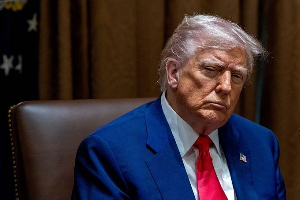 US President, Donald Trump