Ghana imports nearly 200,000 metric tonnes of crude palm oil each year – costing the nation over US$200million.
In presenting the 2026 budget to parliament recently, Finance Minister Dr. Cassiel Ato Forson outlined government’s plan to cultivate 100,000 hectares of new oil palm plantations with the hope of creating over 250,000 direct and indirect jobs.
This policy aims to achieve self-sufficiency in palm oil production while promoting gender inclusion and youth participation across the value chain. Sector stakeholders have hailed plans to invest GH¢6.9billion for an Integrated Oil Palm Development Policy, saying the strategy can leapfrog the commodity’s value chain.
The policy is designed to make Ghana the palm oil hub of West Africa with support for smallholders through improved seedlings, access to finance and processing technology to ensure inclusive growth.
This initiative will be implemented by the Tree Crops Development Authority (TCDA) in collaboration with the Oil Palm Research Institute and private sector partners.
In spite of the GH¢6.9billion allocation to implement the policy, a major financing intervention that sits at the heart of this strategy is the establishment of an extra dedicated US$500million Oil Palm Development Finance Window.
The facility is expected to provide long-tenure loans with a five-year moratorium on both principal and interest, concessional rates and financing for up to 70 percent of project costs for qualified investors and oil palm farmers.
President-Oil Palm Development Association of Ghana Samuel Avaala indicated that the association was consulted on the planned investment. He noted that the budget’s approach toward oil palm development closely mirrors the OPDA’s principles.
As the country awaits full implementation next year, stakeholders – including farmers, researchers, investors and policymakers – will closely monitor progress to determine whether it is meeting the ambitious targets set for 2032.
Oil palm has been one of the most important cash crops since independence, but has continued to underperform despite the sustained policy attention devoted to it.
The pursuit of political liberalisation in the context of a fragile economy has shaped Ghana’s political system for the last thirty years and more, resulting in a competitive, clientelist political system wherein patronage politics has become entrenched.
Although oil palm is indigenous to West Africa, it is now most successfully cultivated as an industrial crop in South-East Asia where it was first introduced as an ornamental tree in the early 1870s. Currently, Ivory Coast is the only net exporter of palm oil on the continent.
All you need to know about Ghana's new vehicle number plates |BizTech:
Business News of Thursday, 11 December 2025
Source: thebftonline.com
Will an Integrated Oil Palm Development Policy revive the ailing industry?
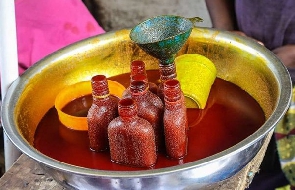 Ghana imports nearly 200,000 metric tonnes of palm oil yearly