The federal government has officially shut down after a deadlocked Congress failed to pass a funding measure to keep the lights on – and no one inside the Capitol knows what will happen next.
A weekslong stalemate between Republicans and Democrats over enhanced Obamacare subsidies has turned into the first government shutdown since 2019. Leaders of both parties are privately and publicly adamant that they will not be blamed for the funding lapse. Republicans insist Democrats need to simply agree to extend current funding for another seven weeks. But Democrats refuse to do so without major concessions for lending their votes to pass any funding measure in the Senate.
Senators left the Capitol on Tuesday night in a state of deep uncertainty about how long the shutdown could last. The Senate is on track to vote again late Wednesday morning on the same GOP funding plan — which Republican leaders have vowed to put on the floor day after day until enough Democrats yield and agree to reopen the government. But many Democrats have declared publicly they will not relent, even as President Donald Trump and his budget office have ramped up threats to use the shutdown to further shrink the size of government — in some cases permanently.
“It’s going to be very harmful for working people,” a visibly exasperated GOP Sen. Josh Hawley told CNN moments after Democrats blocked the bill. “I don’t know how it ends. They don’t know how it ends,” he said. “You’re asking millions of people to pay a really high price.”
In the Democratic party, the pressure is now on Senate Minority Leader Chuck Schumer to keep more of his members from yielding to the GOP pressure campaign to support their seven-week funding bill and agree to negotiate later on the Obamacare subsidies. That task will become tougher with every day of a shutdown, particularly as Trump has threatened to cancel programs favored by Democrats. Inside the party, there’s growing concern about the damage that the White House budget office could cause across the country that can’t be easily reversed by Congress.
Asked if he’s concerned that the White House could do permanent damage to the government, Sen. Sheldon Whitehouse told CNN: “Of course, who wouldn’t be? We have a madman in charge.”
He said Democrats now need to “make sure that Trump is held responsible for all of that, pays the price for it.”
Some cracks have begun to show: Two more members flipped their positions to back the GOP bill on Tuesday night in the final vote before a shutdown: Democratic Sen. Catherine Cortez Masto of Nevada and Sen. Angus King of Maine, who caucuses with Democrats. Democratic Sen. John Fetterman of Pennsylvania also backed the GOP bill and has criticized his party’s strategy during the shutdown fight.
At least two other Democrats appeared to be seriously contemplating their vote on the floor Tuesday — which Republicans took as another sign of weakening in the Democratic party’s stance.
Senior Democrats had long conversations with Sens. Jeanne Shaheen and Maggie Hassan, both of New Hampshire, on the floor before they ultimately voted with Schumer and the rest of their party. After Shaheen cast her vote, she went straight to Senate Republican Leader John Thune and spoke with him privately for several minutes.
Asked later about what appeared to be extensive lobbying ahead of her vote: Shaheen told reporters: “No, I was just having conversations with other people who are thinking long and hard about how we move forward.”
She added that she ultimately decided to vote against the bill to force Republicans into talks on ACA subsidies: “I thought getting this done so that we can now hopefully get back to the negotiating table was the best approach.”
The beefed up premium subsidies, which were first approved as part of a Biden administration Covid-19 rescue package in 2021 and later extended, make Obamacare coverage more affordable for lower-income Americans and enable more middle class households to qualify for assistance.
They spurred a record 24 million people to sign up for policies for 2025. If the enhanced subsidies are allowed to lapse at year’s end, premiums are expected to skyrocket by 75%, on average, for 2026, according to KFF, a nonpartisan health policy research group.
Meanwhile, GOP leaders insisted there are other Democrats who are anxious about a shutdown and want to find an off-ramp to the looming crisis.
“There are Democrats who are very unhappy,” Thune told reporters Tuesday night, adding that he is “having conversations” with some Democrats that he declined to name. “There are others out there I think who don’t want to shut down the government but are being put in a position by their leadership that ought to make all of them very uncomfortable. Tonight is evidence, there is some movement there.”
Schumer, however, was adamant that the American people would see Republicans as causing the shutdown — not his own party — because of the looming health care cliff: “At midnight, the American people will blame them for bringing the government to a halt.”
But asked by CNN whether he can guarantee that nine of his Democrats would not cross over and vote with Republicans, the New York Democrat did not answer.
“Our guarantee is to the American people. We’re going to fight as hard as we can for their health care, plain and simple,” Schumer said, when pressed about the GOP’s plan to put up the same funding plan again and again until enough Democrats yield.
Democratic Sen. Mazie Hirono of Hawaii was hopeful but also doubtful pressure to cut a deal will build on Republicans from their own constituents who will face higher health care costs when their enhanced subsidies expire at the end of this year.
“Let’s hope that they come around to the fact that they’re hurting a lot of their own constituents by not negotiating on the health care issue,” she said. “But you never know, because they apparently don’t care.”
GOP Sen. Lisa Murkowski of Alaska — who is seen as a potential dealmaker on any ACA subsidies deal — told reporters that she believes there still is room to negotiate on health care.
“I think we do have to talk about the impending cliff that we’re looking at with the premium tax credits. What that’s going to look like, I think, is absolutely a subject of discussion,” Murkowski said.
“I hope that people who are interested in seeing this shutdown come to a quick end are willing to talk about ways that we might be able to accomplish that,” Murkowski said.
Watch the latest edition of BizTech below:
Business News of Wednesday, 1 October 2025
Source: edition.cnn.com
US government shuts down with funding deal out of reach on Capitol Hill
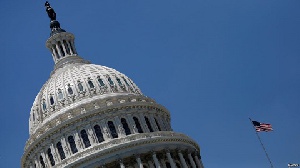 The US Capitol dome is reflected in a puddle on the ground, on September 29, 2025