More than half a century after many African nations gained independence, a growing number are reaching a significant economic milestone, building economies worth at least $100 billion in gross domestic product (GDP).
West Africa’s largest economy, Nigeria, was among the fastest to reach this mark.
Just over three decades after gaining independence in 1960, the oil-rich nation crossed the $100 billion GDP threshold, fueled largely by petroleum exports and its vast domestic market.
According to data from the International Monetary Fund (IMF), compiled by Intelpoint and spanning the period from 1988 to 2025, Africa’s economies have shown resilience over the decades since independence.
Below are the African countries that reached a $100 billion GDP the fastest after independence:
1. Nigeria - 34 Years (1994)
Nigeria became the fastest African country to reach a $100 billion GDP, achieving the milestone 34 years after independence in 1994.
As Africa’s most populous nation, its growth has been driven by oil exports, a large domestic market, and expanding sectors including banking, telecommunications, and entertainment.
2. Angola - 36 Years (2011)
Angola reached a $100 billion GDP in 2011, just 36 years after independence. The country experienced rapid economic expansion after its civil war ended, driven primarily by oil exports, which significantly boosted economic output during the commodity boom of the 2000s.
Ghana ranked among top 10 economies in Africa - President Mahama
3. Algeria - 43 Years (2005)
Algeria crossed the milestone in 2005, 43 years after independence. The country’s growth has been largely fueled by its vast oil and natural gas reserves, which have played a dominant role in government revenue and economic expansion.
4. Morocco - 52 Years (2008)
Morocco reached the $100 billion GDP mark in 2008, 52 years after independence, making it one of the faster-growing economies in North Africa.
Strategic investments in manufacturing, tourism, renewable energy, and automotive production have helped diversify its economy beyond traditional sectors.
5. Kenya - 56 Years (2019)
Kenya achieved the $100 billion GDP milestone in 2019, 56 years after independence.
The country’s economic growth has been largely powered by services, agriculture, technology, and financial innovation, with Nairobi emerging as one of Africa’s leading technology and startup hubs.
6. South Africa - 57 Years (1988)
South Africa reached the $100 billion GDP mark in 1988, 57 years after gaining full sovereignty in 1931.
The country’s industrial base, strong mining sector, and developed financial services industry helped drive economic expansion, making it one of the earliest African economies to cross the threshold.
7. Egypt - 67 Years (1989)
Egypt crossed the $100 billion GDP milestone in 1989, 67 years after gaining independence.
As one of the largest economies in North Africa, Egypt’s growth has been supported by tourism, agriculture, manufacturing, and the Suez Canal, which remains a crucial global trade route contributing significantly to national income.
8. Ghana - 68 Years (2025)
Ghana reached the $100 billion GDP mark 68 years after independence, becoming one of the most recent countries to cross the threshold in 2025.
The country’s economy has grown steadily through a mix of gold, cocoa exports, oil production, and services, alongside consistent economic reforms that have strengthened its financial and industrial sectors.
9. Côte d’Ivoire
Côte d’Ivoire’s nominal GDP per capita is hovering around $3,000, and the economy is expected to grow by about 6–6.4% annually.
It is the largest economy in the West African Economic and Monetary Union (UEMOA), accounting for about 40% of the bloc’s GDP. Its ports and infrastructure make it a gateway for trade across West Africa.
10. Ethiopia - 81 Years
Ethiopia took the longest time among the listed countries to reach the $100 billion GDP milestone, achieving it 81 years after its sovereignty was restored in 1941.
For decades, the country remained largely agrarian with limited industrial activity.
SP/MA
Auto dealers respond to 15% price cut announcement
Business News of Thursday, 5 March 2026
Source: www.ghanaweb.com
Top 10 African economies to hit $100 billion GDP since independence
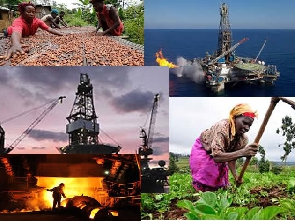 Ghana is among the fastest economies to reach this mark