Minister of Communication, Digital Technology and Innovations, Samuel Nartey George, has disclosed that Telecel Ghana has completed 1,890 network sites across the country, adding that Telecel is expected to complete 2,698 sites by end of year 2026.
Speaking at the Government Accountability Series at Jubilee House in Accra on Monday, September 7, 2026, Sam George said the progress reflects a significant rise in the company's investment in network infrastructure and its efforts to improve 4G coverage.
"We spoke about the cell sites, the 4G sites that we're making Telecel work on this year a total of 1,890 sites to go 4G-compliant as we speak, out of a planned 2,698 for the year," he said.
According to the Minister, Telecel's capital investment increased by 60 per cent between 2023 and 2026 compared with the preceding four-year period, with the company expanding its network to about 9,000 sites nationwide.
Here's how much Ibrahim Mahama paid to support evacuation of Ghanaians from South Africa
He noted that the pace of Telecel's 4G rollout has grown considerably over the years from 237 sites in 2018 to 318 in 2019, 352 in 2020, 110 in 2021, 300 in 2022, 631 in 2023, 451 in 2024, and 860 in 2025.
He added that this scale of investment has become necessary as Ghana's digital usage continues to grow, with smartphone penetration reaching 71.8 per cent as of June 2026, up from 27.5 per cent a decade ago.
Despite the progress, the Minister said network expansion is being undermined by persistent damage to the fibre infrastructure that carries telecommunications traffic across the country. Ghana recorded 8,578 fibre cuts in 2026, he disclosed, with repair costs exceeding US$20 million.
Road construction was the leading cause, accounting for 49 per cent of recorded incidents, followed by illegal mining at 25 per cent, with private developers and other activities responsible for the remaining 26 per cent.
"Fibre cuts, despite all the work we're doing, will continue to be a big challenge for us in this sector, because even when there is capacity and access and infrastructure in an area, when the fibre gets cut, people in that whole area try to make calls and experience deprivation or degradation of service," he added.
The Minister outlined steps government is taking to curb the damage, including a coordination framework being developed by the National Communications Authority (NCA) that would require road agencies and contractors to engage telecom operators before excavation works begin.
He also announced a "Dig Once" policy, which seeks to incorporate dedicated fibre chambers into road construction projects to better protect telecommunications infrastructure, and said government is considering penalties for those who damage fibre infrastructure.
Sam George stressed that protecting the country's telecommunications infrastructure cannot be left to government and network operators alone, urging citizens to take greater responsibility for preventing damage to fibre cables.
"We urge people to be citizens and not spectators. Fibre cuts are the most persistent of these threats," he said.
He added that government would continue working with telecommunications operators to expand network capacity while addressing the external factors contributing to network disruptions.
Business News of Monday, 7 September 2026
Source: Telecel Ghana
Telecel completes 1,890 new cell sites – Sam George
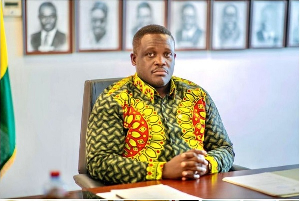 Samuel Nartey George is the Minister of Communication, Digital Technology and Innovations