The Tree Crop Development Authority (TCDA) in a bold move to propel economic growth has set an ambitious target of generating $16 billion in revenue by 2028, focusing on six strategic tree crops that promise significant economic potential.
According to the Chief Executive Officer of TCDA, Dr Andrews Osei Okrah, an existing strategy on the potential of each crop’s revenue generation is $2 billion annually, therefore the 2028 target is achievable.
Dr Okrah indicated that the six crops represent a powerful engine for economic growth, rural development and export diversification.
“By 2028, we aim to generate significant exchange revenue of $16 billion. If we consider the potential of six key crops, we can project that with adequate investment today, we could achieve on average $2 billion annually from each crop. When we multiply that by six, we are looking at a total of $12 billion,” he said.
Speaking at the Center for Applied Research and Innovation in Supply Chain-Africa’s (CARISCA) supply chain forum and exhibition in Accra, the CEO mentioned that the future of Ghana’s tree crop supply chain landscape will not be complete without highlighting the central and the transformative role of the Tree Crop Development Authority.
He added that the strength of tree crop supply chains will determine how inclusive, competitive and sustainable the future will be.
“The ability to effectively finance the potential of Ghana’s tree crop sector depends on appreciating the supply chain landscape in full complexity. The tree crop value chain is not linear. It is a vibrant and multi stakeholder ecosystem with several interdependent roles.”
Established through a 2019 parliamentary act, the TCDA is responsible for developing and coordinating cashew, oil palm, rubber, coconut, mango, and shea. He noted that the Authority is more than a regulatory body but a strategic anchor in a new era in agricultural industrialisation.
The sector primarily relies on smallholder farmers managing less than two hectares of land, forming the backbone of a complex agricultural value chain that includes input suppliers, aggregators, processors, and exporters.
With all the steps being taken by the Authority to drive growth and development, Dr Okrah highlighted some key challenges within the sector which he calls for stakeholders within the value chain to contribute towards resolving those hurdles.
Key among the challenges facing the sector include extensive infrastructure deficits, limited access to financial resources, post-harvest losses, inadequate transportation and storage facilities, among others
Currently, the TCDA is collaborating with the World Bank on a development project aimed at increasing productivity in coconut, rubber, and cashew production. The authority is also working to streamline business licensing, promote investments, and facilitate private sector participation.
The TCDA emphasizes a comprehensive approach to agricultural development, calling on stakeholders to “think big” and consider large-scale investments similar to successful agricultural transformations in countries like Malaysia.
Business News of Wednesday, 6 August 2025
Source: thebftonline.com
TCDA targets $16 billion revenue by 2028, seeks transformative development
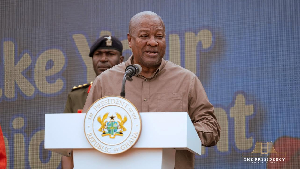
 Dr Andrews Osei Okrah is the Chief Executive Officer of TCDA



Entertainment