The Rubber Farmers Association of Ghana (RUFAG) has described calls for a complete ban on raw rubber exports as false and misleading.
A recent statement by Ghana Rubber Estates Limited (GREL) – a private company – and the Rubber Processors Association of Ghana (RUPAG) alleged that exports of raw rubber are unchecked and hence undermine local processing capacities, threaten the country’s industrialisation agenda to create jobs and allegedly cause annual losses of up to US$100million.
At a press conference in Accra on December 22, 2025, leadership of RUPAG described the allegations as baseless and not reflecting realities of the country’s rubber industry.
An executive member of RUFAG, Michael Nyarku, told B&FT that the push for an export ban by some persons is not about protecting the national industrialisation agenda but a deliberate attempt to monopolise the market, suppress competition and force farmers to sell rubber cup lumps at artificially low prices.
The narrative that processors are the main drivers of employment in the sector, according to RUFAG, is grossly distorted as over two million dependents rely on incomes generated from rubber farming activities for livelihoods against the fewer than 1,000 workers in the various processing companies.
According to RUFAG, the rubber farming and trading ecosystem comprise over 300,000 rubber tappers, 200,000 carriers and loaders and about 150,000 tricycle operators involved in rubber transport.
Government to restrict raw rubber exports to save industry
Nyarku explained that any policy that leads to monopoly pricing and reduced farm-gate prices will not protect jobs but rather destroy them, deepen rural poverty and undermine social stability in rubber-growing communities across the country.
“RUFAG firmly believes that competition, not protectionism, is what will drive efficiency, fair pricing and sustainable growth in the rubber industry. Ghana’s industrialisation agenda must be inclusive and farmer-centred, not driven by narrow corporate interests,” he said.
The Association said allegations that exports of raw rubber are ‘unchecked’ are not true as the Tree Crop Development Authority (TCDA) requires all exporters of unprocessed rubber, cashew and shea to be registered and licensed, with permits issued before export.
“The TCDA has also established a permanent presence at the ports to monitor compliance in collaboration with GRA and the port authorities, making the ‘unchecked’ narrative an entirely false story.”
According to RUFAG, the export market sustained farmers’ livelihoods during COVID-19 when local processors halted their purchase of rubber.
This situation pushed farmers to the brink of abandoning their farms, but exporters provided an alternative market and prevented near-collapse of rubber farmers’ livelihoods.
“It is evident that multiple markets provide security to farmers and prevent unnecessary hardship and youth unemployment, which are major reasons for the upsurge of illegal mining.”
All you need to know about Ghana's new vehicle number plates |BizTech:
Business News of Tuesday, 23 December 2025
Source: thebftonline.com
Rubber farmers stand against calls for export ban
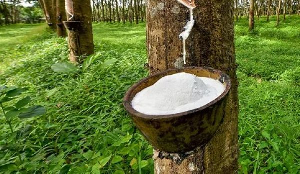 A photo of a rubber plantation