Traders in several Accra markets have pushed back against claims by Minister for Food and Agriculture Eric Opoku that food prices, particularly tomatoes, are falling.
The Minister recently credited government policies and bumper harvests for stabilizing prices and lowering inflation.
Data from the Ghana Statistical Service seems to back him, showing that food inflation dropped from 26% in March to 14.8% in August, and further down to 11% in September. Overall inflation reportedly eased to 9%, the lowest level in more than three years.
However, according to a report by citinewsroom.com on October 4, 2025, tomato traders in markets such as Agbogbloshie, Kaneshie, and Makola say the figures don’t reflect the situation on the ground.
“Tomatoes are still very expensive,” one trader lamented. “A box now sells for about GH₵2,200. If there’s an abundance of tomatoes in Kumasi like the Minister says, we haven’t seen it in Accra.”
Another seller added that prices have been climbing in recent weeks.
“At times, the price drops slightly, but lately it has gone up again. Customers keep saying there’s plenty in supply, yet the quantity in each box has reduced,” she said.
Suppliers also disputed the claim of surplus, saying the current stock in Accra mostly comes from Ada and the Volta Region, not from any reported oversupply in Kumasi.
Meanwhile, onion traders painted a mixed picture. Some said prices have significantly reduced this year due to good harvests, with a bag that sold for GH₵3,200 last year now going for GH₵1,000–GH₵1,800, depending on the market.
Others, however, said they prefer imported onions because local varieties rot quickly and are less appealing to customers.
For other staples, including maize, traders confirmed prices have eased, falling from about GH₵1,400 per bag to GH₵900.
At several rice shops, even imported brands had dropped slightly, which traders attributed to the improved cedi-dollar exchange rate rather than government action.
While many traders welcome any signs of relief, they say the Ministry’s claim of widespread food price reduction doesn’t reflect market realities, and have urged the government to introduce stronger interventions to make staple foods genuinely affordable.
ID/EB
Business News of Saturday, 4 October 2025
Source: www.ghanaweb.com
'Prices are still high in Accra' - Tomato traders reject Agric Minister's claim
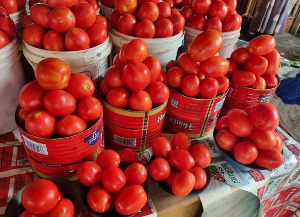 According to traders, the Ministry’s claim of food price reduction doesn’t reflect the market