A Professor of Metallurgical and Materials Engineering at the University of Mines and Technology (UMaT), Tarkwa, Professor James R Dankwah has challenged policymakers to see plastic waste as a vital raw material for industrialisation but not as a menace.
He stated that Ghana can boost industrialization and create jobs by incorporating plastic waste into the iron and steel production chain.
Linking this idea to government initiatives such as the Ghana Integrated Aluminum Development Corporation (GIADEC) and the Ghana Integrated Iron and Steel Development Corporation (GIISDEC), he emphasized that waste plastics could serve as a vital local raw material.
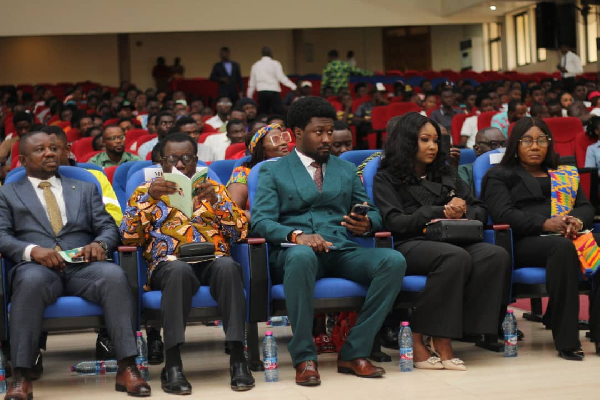
Delivering his professorial inaugural lecture at UMaT, Professor Dankwah who is the Vice Dean of the Faculty of Mining and Minerals Technology and the Head of Department of Minerals Engineering UMaT noted that Tarkwa, described waste plastics as “Ghana’s hidden gold,” insisting they hold the key to job creation, affordable energy, and industrial growth.
“We can set up iron-making industries based solely on plastics blended with other local raw materials. This isn’t theory, we’ve tested and proven it here in Ghana,” he stated.
His presentation, titled “Waste Plastics, a Modern-Day Resource Paradox: Leveraging its Positive Attributes for an Environmentally Sustainable Metals Production,” redefined plastic waste from an environmental threat into an untapped economic resource.
He drew attention to the fact that globally, 4% of crude oil is used to produce plastics.
His research reverses this process, converting discarded plastics back into valuable fuels such as diesel, kerosene, and aviation fuel.
“If Ghana adopts this technology, we can cut down the cost of electricity by up to 70% and provide cheaper fuel for industries and fishermen,” he noted.
Professor Dankwah also challenged the government to fully engage the nation’s universities in industrial problem-solving.
“The public universities are government property, yet they are not being utilised to their full potential. We are ready as researchers to provide homegrown solutions. The government only needs to tap into it,” he urged.
Highlighting the environmental aspect, he encouraged households to start sorting plastics at the source. Sharing a personal example, he revealed that his family had collected over two tons of plastic waste in five years.
“Imagine if 30 million Ghanaians did the same. We could transform waste into a national asset while protecting our environment,” he added.
Business News of Thursday, 7 August 2025
Source: Thomas Tetteh, Contributor
Plastic waste is a resource, not a menace – Professor James Dankwah
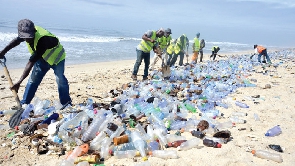 Ghana generates 1.1 million tonnes of plastic waste each year



Entertainment