The latest Ghana 2024 Integrated Business Establishment Survey from the Ghana Statistical Service (GSS) has shown that 92.3% of businesses in Ghana operate within the informal sector, with only 7.7% classified as formal.
According to the Government Statistician, Professor Samuel Kobina Anim, informal businesses generally lack proper registration and do not maintain formal accounting records, making it difficult for regulators and policymakers to track their activities or extend targeted support.
“Based on the total number of establishments counted, about 92.3% fall within the informal sector. These businesses are unregistered and do not keep formal accounts. You cannot track them, follow their operations, or provide them with interventions,” Professor Anim stated.
He noted that even where information on these businesses exists, many lack the capacity to implement formal accounting practices, reinforcing the structural informality of Ghana’s economy.
Sectoral and Regional Breakdown
The report also revealed that over 1.2 million businesses were established between 2014 and 2024, with many recording low annual revenues.
The services sector has the highest proportion of formal establishments among privately-owned businesses, with 10.7% classified as formal, more than six percentage points higher than the industry and agriculture sectors.
55.0% of large and medium-sized privately-owned businesses operate formally, while the majority of small businesses remain informal.
The services sector dominates private sector activities, with more than three-quarters of businesses in this category.
Non-Ghanaian-owned businesses have the highest proportion of formal operations, at 86.9%.
Greater Accra leads in formal business operations, with 12.8% of privately-owned establishments registered.
The findings underscore the persistent informality of Ghana’s business environment, raising concerns about tax compliance, financial inclusion, and policy intervention effectiveness.
SP/AE
Business News of Friday, 4 April 2025
Source: www.ghanaweb.com
Only 7.7% of businesses in Ghana classified as formal - IBES report
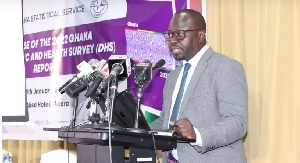 Government Statistician, Professor Samuel Kobina Anim