The global gold industry – and by extension the mining industry in general – has stood out as the utmost beneficiary of the global health crisis since outbreak of the Covid-19 pandemic; however, sadly, mineworkers haven’t benefitted from this surge.
Gold price has trended upward from a pandemic price of over US$1,800 year-on-year, reaching an unprecedented high of over US$3,000 since beginning of this year.
Transformational changes taking place in the country’s mining labour market, unfortunately, have resulted in a marked shift in the nature of employment – away from standard or permanent employment to non-standard forms of employment (including temporary work, casualisation and fixed-term contract work).
“As at the end of 2024, over 90% of the workforce in the mining sector are currently engaged in non-standard forms of employment with standard employment sitting at just about 10%”, Deputy General Secretary of GMWU, Jerry Andoh observed at the first-half National Executive Council meeting for 2025 in Tarkwa.
“As a result of this significant shift exacerbated by the continuous fragmentation of production and outsourcing, aided by policy reforms from the Minerals Commission – and by extension the Ministry of Lands and Natural Resources – in the name of local content/participation, which we find quite retrogressive, workers now have lower levels of employment protection, high degrees of uncertainty and face higher risks in respect of workplace accidents or injuries.”
There has been a surge in workers’ and trade union rights violations, shrinking collective bargaining coverage, job insecurity, threats to social protection cover and fluctuations in income and pensions, Jerry Andoh told GMWU NEC on behalf of General-Secretary Abdul-Moomin Gbana.
This arrangement continues to threaten and undermine the decent work agenda and impoverish members, he added.
“While we generally disagree with this emerging arrangement in the name of local content, it is important to highlight the ills perpetrated by this arrangement and call the attention of all actors within the mining space, particularly government, to take a special interest as this has serious ramifications for the mining industry’s stability going forward.”
The consequences of these cut-throat and suffocating contract rates are dire, as workers’ welfare in these local entities are relegated to the background – and this is manifested in excessive delays for payment of wages/salaries, non-payment of employees’ Provident Fund contributions and terminal gratuities, non-payment of statutory benefits such as pension contributions (1st and 2nd tiers), taxes and protracted negotiation of wages/salaries as well as conditions of service for our members.
“We are therefore calling on all multinational mining companies engaged in this act – and by extension the Chamber of Mines – to pay attention to this growing concern as it has the potential to threaten the industry’s stability in the not-too-distant future if nothing urgent and concrete is done about it.
Business News of Thursday, 14 August 2025
Source: thebftonline.com
Mineworkers lament non-standard forms of employment
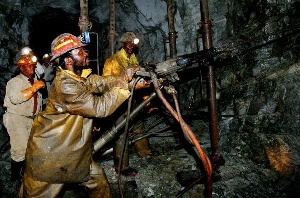 File photo of mineworkers