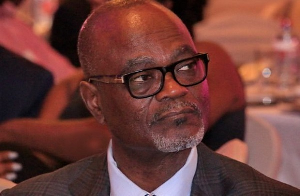
Renowned businessman and philanthropist, Dr Kofi Amoah, has renewed his long-standing call for governments across Africa to place job creation at the very centre of national development agendas, arguing that decent-paying jobs remain the single most important ingredient for economic prosperity, social stability, and national progress.
His comments, posted on his verified X account @Amoah_Citizen, come in the wake of renewed xenophobic attacks in South Africa that have reportedly targeted African migrants from other countries living and working there.
Earlier this month, the government of Ghana facilitated the repatriation of more than 300 Ghanaian nationals from South Africa after some were subjected to harassment, intimidation, and physical abuse by anti-immigrant groups.
From 50 to 20: US to slash visa processing posts across Africa
For Dr Amoah, the disturbing developments serve as a stark reminder of a deeper challenge confronting many African countries: the inability to create sufficient opportunities for their own citizens.
According to him, many young Africans do not leave their home countries by choice, but are compelled by economic necessity and the search for a better future.
“If Ghana offered decent-paying jobs and living wages to the majority of its young people, many would not feel compelled to leave home in search of greener pastures elsewhere,” he noted.
Dr Amoah, who has for decades championed entrepreneurship, youth empowerment, and economic transformation, believes jobs are more than sources of income. They are the foundation upon which societies build dignity, security, and hope.
“JOBS, the wellspring of people’s welfare, must not be toyed with,” he stressed.
According to him, history shows that successful nations thrive because they are able to create meaningful employment opportunities for their citizens.
“When the majority of any population have decent jobs, most social problems subside. Conversely, when good-paying jobs become scarce, societies experience rising poverty, crime, frustration, migration pressures, and social instability,” he said.
Drawing lessons from some of the world’s leading economies, Dr Amoah pointed to countries such as the United States, China, India, Germany, France, and Italy, noting that their economic progress has been driven in large measure by their ability to keep the vast majority of their populations productively employed.
He argues that Ghana’s growing army of unemployed and underemployed youth should command greater attention than any other national challenge.
As a result, he is calling on President John Dramani Mahama and his administration to make employment creation the foremost priority under the government’s Reset Agenda.
“LET THE CREATION OF JOBS JUMP TO THE TOP OF THE RESET AGENDA to help ease the plight of Ghana’s reserve army of the jobless,” Dr Amoah declared.
He described Ghana’s unemployed youth population as one of the country’s most valuable assets, insisting their potential contribution to national development exceeds even the value of the country’s natural resources.
“They are of much greater worth than the gold and bauxite beneath our feet,” he remarked.
Beyond Ghana, Dr Amoah is urging governments across Africa to rethink traditional approaches to economic development and place employment generation at the heart of public policy, education, vocational training, and national planning.
He believes the continent’s economic transformation will remain elusive unless deliberate measures are taken to equip millions of young Africans with relevant skills and connect them to productive opportunities.
Importantly, Dr Amoah rejects the widely held notion that job creation should be left primarily to the private sector.
While acknowledging the critical role businesses play in economic growth, he insists governments must assume a much greater responsibility in creating the conditions and opportunities that generate employment at scale.
“We must jettison the preferred slogan that the private sector is the engine of growth and government is only there to provide an enabling environment,” he argued.
“If jobs are the vehicles through which nations journey to their economic heavens, and governments are the custodians and spenders of national resources, including revenues from minerals and borrowed funds, then governments must bear a much greater responsibility to ensure the provision of good-paying jobs for all the people,” he said.
Dr Amoah remains optimistic that the challenge can be overcome if governments demonstrate the necessary commitment and political will.
“We can do this if we want it, wish it, and desire it,” he said.
As African leaders continue to grapple with unemployment, migration, and growing social pressures, Dr Amoah’s message is clear and uncompromising: sustainable development begins with jobs, and governments must treat employment creation not as a peripheral objective, but as the defining measure of success.
For him, the path to Africa’s future prosperity is straightforward: put people to work, pay them productive wages, and watch nations flourish.
Ghana with a living wage JOB or South Africa,… or across the Sahara Dessert to somewhere, somehow with a dream to dare…
— CitizenKofi (@amoah_citizen) May 25, 2026
Your comments please
Return home to Ghana or stay in South Africa and tough it out?
This brings home to mind former President Kufuor’s Homecoming Summit…