The Deputy Chief Executive Officer for Operations and Technical at the Petroleum Hub Development Corporation (PHDC), Onasis Rosely Kobby, has emphasised that recent shifts in global geopolitics present a unique opportunity for Ghana to accelerate the development and operationalisation of its Petroleum Hub project.
In a social media post sighted by GhanaWeb Business, Kobby explained that the ongoing Israel-Iran conflict, expected to drive a surge in global oil prices, highlights the urgent need for Ghana and the West African sub-region to establish robust infrastructure that enhances regional resilience against unforeseen economic shocks.
Kobby projected that Ghana’s demand for petroleum products, which stood at 1.36 million metric tonnes in 2014, could double by 2040. This anticipated growth in demand represents a significant gap that a fully operational petroleum hub could address.
Extending his analysis to the sub-region, Kobby forecasted that oil demand among ECOWAS member states could reach 3 million barrels per stream day by 2040, creating a lucrative opportunity for Ghana.
“Ghana’s oil demand could double by 2040. Refining locally instead of importing would save billions in forex. Landlocked neighbors such as Burkina Faso, Mali, and Niger lack refining capacity, making Ghana well-positioned to capture the growing ECOWAS regional demand, which could reach 3 million barrels per day by 2040,” part of his post read.
“Energy Transition Strategy: Even in a net-zero scenario, Africa’s oil demand is projected to remain resilient beyond 2050. A modern refinery could adapt to produce biofuels and hydrogen-ready feedstocks,” he added.
With Africa’s oil production expected to grow until at least 2050, Kobby underscored Ghana’s strategic advantage as an ideal geographical hub for the distribution of petroleum and petrochemical products.
He urged the nation to fast-track its plans to develop a petroleum hub, stating, “For Ghana, this means that now is the time to build refining and storage capacities. ECOWAS’ dependence on imports presents a huge market opportunity, and Ghana’s strategic positioning can make it a regional energy hub.”
See the full post below:
SA/MA
Business News of Monday, 16 June 2025
Source: www.ghanaweb.com
Israel vs Iran War: Now is the time to make Ghana an energy hub - Onasis Kobby
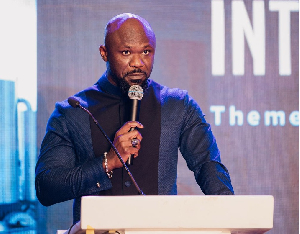 Deputy CEO in charge of Operations and Technical at PHDC, Onasis Rosely Kobby