The Director of Communications at the Bank of Ghana (BoG), Bernard Otabil, has urged journalists to translate monetary policy decisions into stories that reflect the everyday experiences of Ghanaians.
He said journalists must go beyond reporting technical policy announcements to explain how decisions on inflation, exchange rates and interest rates affect households and businesses.
Otabil made the call on Monday, October 19, 2026, when he delivered the welcome address at the opening of a three-day training workshop for members of the BoG Press Corps.
The workshop, which runs from October 19 to 21, is aimed at strengthening journalists’ understanding of monetary policy and the central bank’s operations.
Topics scheduled for the training include media ethics and accurate reporting, the mandate and regulatory role of the Bank of Ghana, the central bank’s balance sheet, the domestic gold purchase programme, developments in the foreign exchange market, inflation dynamics and Monetary Policy Committee (MPC) statements.
Welcoming participants on behalf of the Governor, management and staff of the Bank, Otabil said monetary policy communication was essential to building public trust.
“We believe monetary policy is most effective when it is understood, trusted and accurately communicated,” he said.
He noted that although many members of the public might not read MPC reports, they relied on news headlines and media reports to make economic decisions.
“Accuracy therefore is not just a professional virtue, it is an economic asset,” he stressed.
Otabil cautioned that misleading reports on inflation, exchange rates or the policy rate could trigger panic, fuel speculation and negatively affect households and businesses.
He said ethical journalism, based on verification, balance, context and clarity, was essential to combating misinformation and disinformation.
“Misinformation and disinformation are no longer peripheral concerns. The World Economic Forum's Global Risks Report now ranks them among the most severe global threats. From deepfakes to AI-generated market rumours, from social media amplification to coordinated disinformation campaigns targeting currencies, no central bank and no country is immune. This is a global phenomenon,” he added.
He described credibility as journalism’s most valuable asset, saying accurate and ethical reporting could help anchor public expectations, protect savings and support economic stability.
Otabil said the Bank of Ghana remained committed to strengthening its relationship with the media through initiatives such as expanded training programmes, the Regional Press Corps, the Editors' Forum, dedicated WhatsApp communication platforms and the Governor's Economic and Financial Story of the Year Award.
He urged participants to engage actively in the workshop, ask questions and challenge the Bank to ensure meaningful discussions.
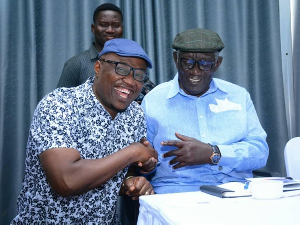
Also present at the opening was Suleiman Mustapha, National Organising Secretary of the Ghana Journalists Association (GJA) and a member of the BoG Press Corps, who delivered brief remarks.
Business News of Monday, 19 October 2026
Source: www.ghanaweb.com
Humanise monetary policy reporting – Bernard Otabil urges journalists
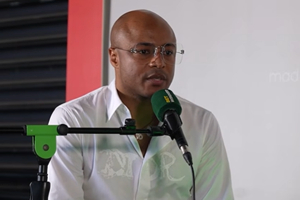
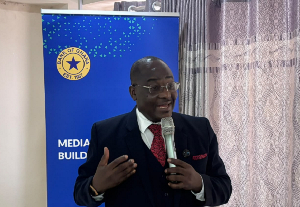 Bernard Otabil is the Director of Communications at the Bank of Ghana (BoG)