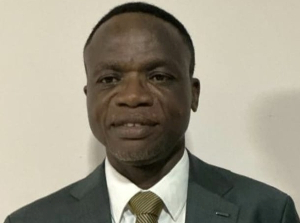
The Minister of Food and Agriculture, Eric Opoku, has announced that Ghana is targeting self-sufficiency in rice production by 2028, citing ongoing government interventions, international partnerships and efforts to mechanise agricultural production.
According to him, the government is receiving agricultural equipment from Japan to support rice seed production, with the machinery expected to be deployed to various seed production enclaves across the country.
Speaking at an event on Monday, November 9, 2026, Eric Opoku said the intervention formed part of efforts to gradually transition Ghana’s agricultural sector towards mechanisation and improve productivity among farmers.
He further disclosed that the government was collaborating with Italy to cultivate rice on 3,000 hectares of land, with the project currently underway in the Volta Region.
The minister expressed confidence that the combined impact of the Japanese-supported equipment, the Italian partnership and other government interventions would enable Ghana to meet its rice consumption needs locally by 2028.
“We are gradually moving to agricultural mechanisation. The equipment will be made available to our farmers in the various seed production enclaves,” he stated.
However, the minister identified consumer patronage of locally produced rice as a major factor that could determine the success of the government’s ambition.
He argued that increasing domestic production alone would not be sufficient if farmers continued to struggle to find markets for their produce.
Eric Opoku added that the government was strengthening the capacity of processors to absorb produce from farmers to address concerns about market access and ensure that increased production translates into improved livelihoods.
He consequently urged Ghanaians to make conscious decisions to purchase locally produced rice instead of choosing imported alternatives solely because of their prices.
According to him, patronising Ghanaian rice would create a ripple effect across the agricultural value chain, generating opportunities for farmers, processors, transport operators and other businesses.
“When you buy rice and other things produced here in Ghana, you are creating opportunities for producers, processors and transporters to employ more people,” he said.
Minister Opoku maintained that supporting locally manufactured and processed products is also a way for citizens to contribute to job creation, particularly for the country’s unemployed youth.
The minister further argued that excessive dependence on imported products meant that employment opportunities associated with their production and processing were being created in exporting countries rather than Ghana.
He, therefore, called for a collective national effort involving farmers, the government and consumers to strengthen domestic production and expand the economy.
While the government would continue providing the necessary support, logistics and enabling environment for farmers, he said consumers also have a responsibility to support the local agricultural industry.
He urged Ghanaians to consider the broader economic benefits of purchasing locally produced rice, rather than making purchasing decisions based exclusively on price.
“Farmers are producing, government is creating the enabling environment and providing the support, the logistics and everything. Consumers, what can we do? We must also buy from where it is produced,” he added.
Samira Bawumia Stuns Audience with ‘Asaase Yaa’ Poem at Literary Night
Business News of Tuesday, 10 November 2026
Source: www.ghanaweb.com
Ghana targets rice self-sufficiency by 2028
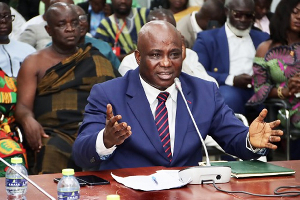 Minister of Food and Agriculture, Eric Opoku