The International Monetary Fund (IMF) has given a strong endorsement of Ghana’s economic recovery, citing robust growth, declining inflation and improvements in public finances.
The Fund also announced a staff-level agreement with Ghana on the first review of the country’s Policy Coordination Instrument (PCI), following discussions in Accra from October 22 to November 4, 2026.
In a statement issued on Thursday, November 5, 2026, the IMF said the country's macroeconomic stability was becoming firmly established, with recent economic gains supported by stronger investment, improved fiscal conditions and policy measures.
“Macroeconomic stability is becoming entrenched,” said IMF mission chief, Dr Ruben Atoyan, following the discussions.
Ghana’s economy grew by 6.2% in the first half of 2026, while inflation declined to 5.5% in October, reflecting improving economic conditions.
The Fund projected that economic growth would reach 5.7% by the end of 2026, despite external economic pressures.
On public finances, the IMF said Ghana’s primary surplus was on course to meet its end-of-year target, while public debt had declined significantly in recent years.
It added that the economic gains and financial buffers built over the past few years had helped the country absorb some of the external shocks arising from the ongoing conflict in the Middle East.
“These gains, together with the buffers built in recent years, allow the authorities to partly absorb the external shock stemming from the war in the Middle East,” the Fund stated.
Looking ahead, the IMF noted that the 2027 Budget was targeting a primary surplus of 0.5% of Gross Domestic Product (GDP), in line with Ghana’s economic programme.
According to the Fund, the target would help maintain fiscal discipline while creating room for priority spending on job creation and infrastructure development.
However, the IMF cautioned that Ghana’s economic outlook remained exposed to external risks, particularly fluctuations in global commodity prices.
It warned that changes in the prices of key commodities could affect government revenue, foreign exchange earnings and the country's ability to sustain economic stability.
The Fund therefore urged the government to rebuild international reserves, strengthen domestic revenue mobilisation and diversify the economy to reduce its dependence on commodity exports.
It also emphasised the need to sustain ongoing economic reforms to protect recent gains and strengthen the country's resilience against future economic shocks.
The IMF said maintaining sound economic policies would be critical to ensuring that Ghana's recent progress translates into lasting economic stability and sustainable growth.
ANAS/MA
Dr Zanetor Challenges Workers: “Turn Your Skills Into Commercial Ventures”
Business News of Thursday, 5 November 2026
Source: www.ghanaweb.com
Ghana's economic stability taking firm root – IMF
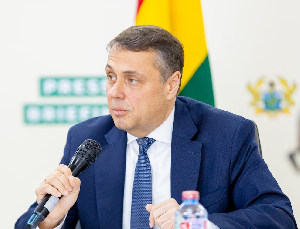 The IMF mission is led by Dr Ruben Atoyan