GhanaWeb Feature by Mawuli Ahorlumegah
For weeks, the whispers in Ghana’s financial corridors have been loud, with scores indicating that the cedi is under pressure, the black market is thriving, and panic about a shortage of dollars is spreading. But the Bank of Ghana (BoG) has a simple response: “Ghana is not running out of dollars.”
That blunt assurance, delivered by Governor Dr Johnson Asiama, underscores a central point: the turbulence in the foreign exchange (FX) market is not about scarcity but about distortions. And now, the BoG says the time has come to shut those distortions down.
Not fundamentals, but bad practices?
Dr Asiama’s message is clear; according to him, the gap between official rates and black-market rates is artificial. It does not reflect the true fundamentals of Ghana’s economy but rather the actions of a few players taking advantage of loopholes.
“What you see on the black market is not the true value of the cedi. It reflects distortions created by a handful of actors moving bulk cash or abusing documentation. These practices undermine the strength of the cedi, and I want to assure you that the Bank of Ghana and the Ministry of Finance are acting firmly to tackle them,” the Governor recently explained.
Despite witnessing some level of appreciation in recent months, the Ghana cedi has slipped to GH¢11 to the US dollar on the interbank market.
In its daily update on August 28, 2025, the Bank of Ghana reported that the cedi was trading at a buying price of GH¢11.04 and a selling price of GH¢11.05 to the dollar on the interbank market.
Against other major currencies, the British pound was being bought at GH¢14.87 and sold at GH¢14.89, while the euro traded at a buying price of GH¢12.81 and a selling price of GH¢12.83.
On the retail market, however, the cedi continues to face steeper depreciation. Checks by GhanaWeb Business on August 28, 2025, at 8:00 am revealed that the dollar was trading at GH¢12.50 at some forex bureaus across the country.
At the same outlets, the pound was selling at GH¢16.80, while the euro was being exchanged for GH¢14.75.
At the heart of these market distortions are practices that have been allowed to fester for years; remittance leakages, bulk cash trading, and somewhat false demand for foreign exchange.
But what is different today? The Governor insists it is not that the problems are new but that the central bank is acting with sharper tools and greater resolve.
Closing loopholes, tightening oversight:
The list of infractions uncovered is long and costly.
• Remittance leakages: Some remittance companies were offshoring dollars instead of bringing them into the country. The BoG says those loopholes are now closed.
• Unregulated innovation: Certain payment service providers dabbled in offshore settlement and even crypto-related FX models. Innovation is welcome, regulators say, but not at the cost of weakening the cedi.
• Informal cash flows: Millions in bulk cash transactions, bypassing the formal banking system, have fueled instability. Tighter monitoring is underway.
• FX withdrawals feeding the black market: The BoG estimates that millions of dollars withdrawn weekly from the banking system have been diverted into illicit trading. This pipeline is now being cut off.
• False import demand: Perhaps most damaging, the Ministry of Finance discovered that some importers filed Import Declaration Forms (IDFs) to access FX allocations without bringing in goods. This created “phantom demand,” draining hard currency away from legitimate trade.
The central bank’s position is uncompromising: these interventions are not about stifling business but about creating a fairer, more disciplined system.
The BoG has occasionally stressed: “This is not about restricting legitimate business. It is about ensuring a level playing field where those who operate within the rules are protected, and those who try to exploit gaps cannot undermine the system.”
What are market watchers saying?
For some market watchers and analysts, what makes this moment different is not just the identification of problems; after all, these practices have been known for years, but the willingness to act swiftly and decisively.
“These are not new issues, but the difference now is that the central bank is seeking to close the gaps, tighten oversight, and enforce discipline,” Governor Asiama has said.
Additionally, in recent weeks, stakeholders in the forex market have seen a wave of regulatory directives and enforcement actions aimed at restoring discipline in the market.
This includes closer scrutiny of FX withdrawals, stricter licensing oversight for remittance companies, and tighter regulation of PSPs experimenting with offshore models.
Some observers have argued that the central bank’s focus on loopholes rather than blunt restrictions is key, and therefore, by protecting legitimate businesses while cracking down on manipulation, the BoG is signaling that it wants the cedi’s value to reflect economic fundamentals, not the behavior of a few opportunistic actors.
How does the BoG restore confidence at home and abroad?
The BoG’s new posture seems to send a strong signal to both local businesses and international partners as Ghana intends to defend the credibility of its currency system.
For businesses that rely on stable exchange rates to plan imports, investments, and payrolls, the interventions could not have come at a better time.
“Let me assure you; the Bank of Ghana and other collaborating agencies are being proactive. We are intensifying monitoring, enforcing compliance, and ensuring that the rules governing foreign exchange are respected across the board,” Dr Asiama said in a recent interview with Accra-based Joy News.
Looking ahead: a stronger, fairer market?
For most businesses, the path forward is not without challenges as currency markets are notoriously sensitive to speculation, and restoring credibility takes time. Yet, the BoG’s interventions suggest a determination to build a stronger, fairer market where confidence, not distortion, dictates value.
For now, the central bank has drawn a line: Ghana’s problem is not a shortage of dollars but the abuse of access. The real test will be whether its actions can shift both perception and practice.
As the Governor put it, the mission is clear: to defend not just the cedi but the trust that underpins Ghana’s financial system.
The verdict awaits all.
MA
GhanaWeb's latest documentary, Sex for Fish, that explores the plights of teenage girls in coastal communities, all in an attempt to survive, is out. Watch it below:
Business News of Friday, 29 August 2025
Source: www.ghanaweb.com
Ghana's FX Market: How is BoG moving to curb distortions and protect the cedi?
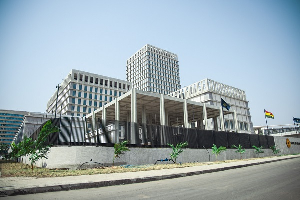 Bank of Ghana's new headquarters