Ghana’s benchmark lending rate has edged down to 10.01 percent for November 2026, extending the recent easing in borrowing costs and potentially creating further room for cheaper credit to businesses and households.
The Ghana Reference Rate (GRR), which commercial banks use as a key benchmark in pricing loans, declined from 10.04 percent in October, representing a marginal reduction of 0.03 percentage points.
The latest adjustment follows successive declines in September and October, reinforcing the downward movement in the benchmark after an increase in July and August.
The November rate was calculated using the industry-approved formula and prevailing market data, with market participants attributing the latest reduction largely to a marginal decline in Treasury bill yields over the review period.
The monetary policy rate and interbank rate, which also feed into the GRR calculation, remained unchanged.
The reduction could translate into lower borrowing costs for customers whose existing variable-rate facilities are linked to the benchmark, although the extent and timing of any adjustment will depend on individual loan agreements and banks’ repricing arrangements.
New borrowers could equally benefit from the lower benchmark, particularly those with strong credit profiles who are better positioned to negotiate favourable lending terms.
Indeed, some market participants indicate that selected customers are already accessing consumer loans at interest rates of around 9 percent, reflecting competition among banks for creditworthy borrowers.
They say individuals and businesses with established repayment records are increasingly benefiting from single-digit lending offers, even as the broader cost of credit remains influenced by individual risk assessments and other bank-specific charges.
However, the latest GRR reduction does not automatically translate into lower interest payments for every borrower. Customers on fixed-rate facilities, in particular, are unlikely to experience immediate changes, while variable-rate borrowers must wait for the applicable repricing dates under their agreements.
Mixed movements in 2026
The November outcome continues a fluctuating trend in the benchmark throughout the year.
The GRR stood at 11.71 percent in March before dropping sharply to 10.06 percent in April. It eased further to 10.03 percent in May and 10.02 percent in June.
The downward movement was subsequently reversed, with the rate rising to 10.59 percent in July and 10.61 percent in August.
It resumed its decline in September, falling to 10.18 percent before easing to 10.04 percent in October and the latest 10.01 percent for November.
The benchmark serves as a common reference point for loan pricing across Ghana’s banking industry, allowing lenders to incorporate prevailing market conditions into their interest rate calculations.
However, banks retain discretion to apply additional margins based on borrowers’ creditworthiness, the nature of the facility, repayment risks and other lending considerations.
Market participants expect borrowing costs to ease further if Treasury bill yields and other funding costs continue to decline, alongside government efforts to improve access to affordable credit.
For businesses, particularly small and medium-sized enterprises, sustained reductions in lending rates could improve access to working capital, support investment and ease financing pressures.
Business News of Tuesday, 3 November 2026
Source: businesspostonline.com
Ghana Reference Rate dips to 10.01% in November
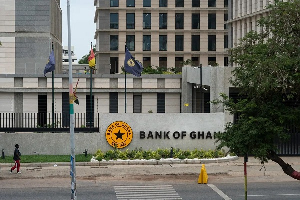 Bank of Ghana's heaadquarters