Some 250 young Ghanaians have been trained in data analytics this year, achieving an 80 percent job placement rate under the GROW program, an initiative led by Generation Ghana.
The in-depth training, organised by Blossom Academy and delivered through five 12-week cohorts in Accra and Kumasi, equipped unemployed university graduates with skills in Excel, SQL, Power BI, and Python.
The programme forms part of Generation Ghana’s nationwide GROW initiative, which has empowered more than 2,000 young people and supports the Mastercard Foundation’s Young Africa Works strategy aimed at creating 250,000 digital jobs in Ghana by 2030.
Seth Agyemang, Employer Partnerships Strategist at Blossom Academy, said the programme is helping to build a competitive local talent pipeline.
“Africa’s tech ecosystem is expanding rapidly, yet companies often outsource digital talent. We are changing that by developing world-class professionals right here in Ghana,” he said. “Our greatest achievement is not just the numbers, it’s seeing young people move from unemployment to earning competitive salaries and supporting their families.”
A key feature of the GROW program is its freelance mentorship model, which pairs trainees with experienced freelance data professionals from Ghana, Nigeria, Kenya, and South Africa.
These mentors, referred to as super agents, guide graduates on platform optimisation, client engagement, and how to build sustainable careers on platforms such as Upwork and Fiverr.
Some trainees say the freelancing pathway has been transformative.
“I chose the freelancing track because I wanted remote work flexibility to spend more time with my family,” said Erica Aniemeke, a Cohort 3 graduate. “With my mentor’s support, I secured my first contract within three months. Today, I earn a steady income as a freelance financial analyst.”
Women accounted for 76 percent of all participants, well above typical gender representation in tech programmes, highlighting the initiative’s impact on supporting women into digital careers. The expansion of training to Kumasi also reflects efforts to broaden regional access to digital skills.
The Academy says it plans to scale the programme further by strengthening alumni support systems, expanding regional reach, and improving pathways into both formal employment and freelancing as it works to build a skilled digital workforce for Ghana’s growing economy.
Business News of Wednesday, 10 December 2025
Source: www.ghanaweb.com
GROW Program empowers 250 young Ghanaians with in-demand digital skills
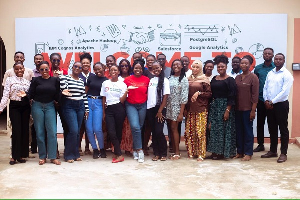 The programme forms part of Generation Ghana's nationwide GROW initiative