After three years of targeted action against plastic waste, the Go Circular Ghana project has officially concluded.
The initiative, implemented by the German Development Cooperation (GIZ) on behalf of the German Federal Ministry for Economic Cooperation and Development (BMZ), brought together key players from government, business, and civil society for a final event celebrating its achievements and calling for broader scale-up.
This marks a significant milestone in Ghana’s fight against plastic pollution and its transition toward a circular economy.
Since its inception, Go Circular Ghana aimed to reduce the prevalence of single-use plastics (SUPs) and promote sustainable practices. At the project’s close, stakeholders emphasized that its impact speaks louder than intentions.
“Reducing plastic waste is not only possible, but it is already happening,” organisers said in a statement. “The project leaves behind scalable tools, business innovations, and cross-sector partnerships that now call for wider adoption.”
The project featured three flagship interventions that tackled plastic pollution through both policy and grassroots action.
A Roadmap to Phase Down Single-Use Plastics was developed, focusing on the supermarket, retail, hospitality, and food and beverage industries. The roadmap, created in close consultation with stakeholders, serves as a practical guide to align Ghana’s plastic reduction efforts across sectors.
Additionally, a Voluntary Pact was signed by eight businesses, pledging to cut their single-use plastic use by half by 2030. Among the pact’s successes was the nationwide media campaign, Bag the Habit of Single-Use Plastic, which reached over 20 million Ghanaians via radio, TV, and billboards with the slogan: Be part of the solution, not the pollution!
“A pilot at one supermarket chain encouraged over 1,000 customers to switch to reusable bags,” organisers noted, adding that a 20% bag return rate signals growing consumer readiness.
The project also launched a Business Development Programme for SMEs in the food and catering sector. In collaboration with Impact Footprints Africa, businesses were supported to adopt more sustainable, culturally rooted packaging alternatives.
“This initiative targeted plastic reduction at the grassroots level,” the project team said, encouraging a return to traditional, low-waste practices.
While the project’s conclusion marks the end of this phase, stakeholders insist the work must continue.
“Plastic reduction is no longer just a commitment, it’s a proven path forward. Let’s keep the momentum going,” the statement read.
The Go Circular program is a global initiative supporting partner countries in adopting circular economy practices by scaling innovations and building strategic partnerships.
In Ghana, the focus has been on reducing single-use plastics through policy development, public awareness campaigns, and business collaborations.
Implemented by GIZ, the project forms part of Germany’s broader development cooperation portfolio in Ghana, which includes over 50 programs addressing energy, job creation, climate resilience, and governance.
ID/MA
GhanaWeb Special: The gold market that fuels galamsey
How social engineering hacks your mind and your bank account
Business News of Saturday, 28 June 2025
Source: www.ghanaweb.com
GIZ Ghana concludes Circular Project after three years of action against plastic waste
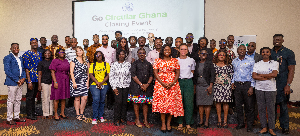 Go Circular Ghana aimed to reduce the prevalence of single-use plastics (SUPs)




Entertainment