The Ghana Extractive Industries Transparency Initiative (GHEITI) has endorsed government’s new sliding-scale mineral royalty regime, describing it as a fair framework that aligns royalty rates with global gold prices while balancing the interests of the state and mining companies.
GHEITI emphasised that sliding-scale royalty regimes are not new to Ghana.
“As far back as 1986, through section 22 of the Minerals and Mining Act (PNDCL 153), further clarified by the Minerals (Royalties) Regulations of 1986 (L.I. 1340) and 1987 (L.I. 1349), Ghana established a mineral royalty sliding scale of 3 percent to 12 percent, with triggers for moving up or down linked to mine profitability, expressed as Operating Ratio.”
Since 2006, the country’s mineral royalty framework has undergone several revisions. The range was narrowed from 3 -12 percent to 3 – 6 percent, and a flat 5 percent rate was introduced in 2010 under Act 794. A subsequent amendment in 2015 granted the Minister of Lands and Natural Resources discretionary powers to determine royalty rates.
In practice, GHEITI noted that earlier sliding-scale models faced compliance challenges, as companies frequently paid the minimum rate regardless of market conditions.
“The problem with fixed-rate royalty regimes is that they can become onerous for companies when prices are low, while denying the resource owner the opportunity to capture a fair share of economic value during commodity booms,” the organisation said.
While welcoming the new framework, GHEITI cautioned that the simultaneous application of the Growth and Sustainability Levy (GSL) could create an unprecedented fiscal burden, potentially weakening the country’s investment appeal.
Government introduces cooperative licences for small-scale miners – Dr Frank Amoakohene
It noted that the levy, currently set at 3 percent of gross production, or roughly 4.6 percent in royalty-equivalent terms because it is not tax-deductible, combined with the proposed 5 – 12 percent sliding-scale royalty, could push the total fiscal take from mining companies to above 16 percent of gross production.
GHEITI argued that such a level would be difficult to find in most global mining fiscal regimes.
However, Parliament is reported to have approved an amendment to the GSL, reducing the levy on gold mining companies from 3 percent to 1 percent of gross production in a move aimed at maintaining competitiveness while the new royalty regime takes effect.
The Growth and Sustainability Levy (Amendment) Bill, 2026 was passed on Friday, March 14 following the introduction of new royalty rules under the Minerals and Mining Royalty Regulations, 2025, which establish a sliding-scale mechanism linked to international gold prices.
The Legislative Instrument (L.I.), which will take effect after the constitutionally required 21 sitting days in Parliament, allows the state to adjust royalty rates in response to fluctuations in global gold prices, enabling the country to capture higher revenues during periods of strong commodity markets.
In a statement signed by its Co-Chair, Dr Steve Manteaw, GHEITI said the new sliding-scale model, pegged between 5 percent and 12 percent depending on gold price movements, is designed to share risks and rewards more equitably between the state, as resource owner, and investors.
“The new regime is fair in principle, especially in the absence of a windfall tax provision,” Dr Manteaw said.
He noted that companies with existing development agreements, including Zijin Mining, AngloGold Ashanti and Gold Fields, will continue to operate under the fiscal terms contained in those agreements.
Dr Manteaw explained that earlier sliding-scale regimes were often difficult to enforce because of the complexities involved in calculating operating ratios, as well as generous capital allowances that reduced companies’ reported profitability.
“Companies often paid the minimum rates regardless of market conditions,” he noted.
The new price-linked structure, which ties royalty bands directly to gold prices, is intended to simplify compliance and improve transparency.
Despite its endorsement of the reform, GHEITI expressed reservations about the design of the royalty bands, describing them as “overly aggressive and inflexible” in accommodating lower price scenarios.
Industry players have raised similar concerns, particularly about the transition thresholds under which roughly every US$500 increase in gold prices triggers a one-percentage-point rise in the royalty rate.
GHEITI, therefore, urged government and industry to sustain dialogue on possible adjustments that could balance fiscal objectives with the need to maintain a competitive investment climate.
It also proposed exploring mechanisms to better integrate small-scale mining operations into the royalty system, which could expand the domestic tax base while strengthening compliance across the sector.
The organisation further suggested that the government consider withdrawing the Growth and Sustainability Levy altogether to ease the combined fiscal burden on mining companies.
“The biggest threat to Ghana’s investment attractiveness is fiscal unpredictability, not the royalty regime itself,” GHEITI said.
Auto dealers respond to 15% price cut announcement
Business News of Tuesday, 17 March 2026
Source: thebftonline.com
GHEITI backs new sliding-scale mineral royalty
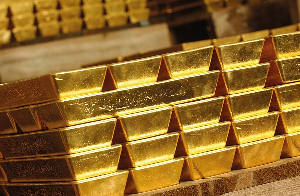 File photo of gold bars







Opinions