The Ghana Airports Company Limited (GACL) has taken note of a recent opinion article titled “Reconstruct Terminal 2: Don’t Refurbish the Past at the Expense of the Future.” We acknowledge and appreciate the public interest in the development of airport infrastructure in Ghana, particularly at Accra International Airport.
Clarification on Terminal 2 development
The claim that the construction of Terminal 3 was based on Terminal 2 being obsolete is false, misleading, and misconceived.
GACL’s decision to defer the renovation of Terminal 2 and instead construct Terminal 3 was based on a terminal planning study commissioned in 2013. At the time, Terminal 2 was the sole terminal for international operations, and undertaking major reconstruction works within an active terminal would have resulted in:
Significant disruption to live operations
A decline in passenger experience, with possible airport downgrading
Severe revenue losses, affecting GACL’s operational and financial obligations
It is important to emphasise that these considerations had nothing to do with Terminal 2 being obsolete or earmarked for demolition.
Strategic planning and terminal connectivity
The overriding factor in the decision-making process was the need to avoid disruption to ongoing operations, as supported by the 2013 planning study.
The same study recommended the development of a connecting concourse between Terminals 2 and 3. Consequently, GACL opted to construct Terminal 3 as a new facility that would not interfere with existing operations.
This position was further supported by the Dorsch report (National Airport Systems Plan), commissioned by the Ministry of Transport and sponsored by the World Bank in 2014. The report anticipated that Terminal 2 would be refurbished and eventually integrated with Terminal 3.
It is therefore contradictory to suggest that a credible, World Bank-backed study would recommend connectivity with a terminal deemed obsolete or marked for demolition.
Existing investments in Terminal 2
Contrary to claims of obsolescence, Terminal 2 has undergone incremental upgrades over the years. Notably:
Parts of the arrivals hall were remodelled in 2013
An extension was completed, now housing GACL and key state agencies, including:
• Ghana Immigration Service
• National Security
• Narcotics Control Commission
• Bureau of National Intelligence
These investments clearly demonstrate continued functional relevance, not abandonment.
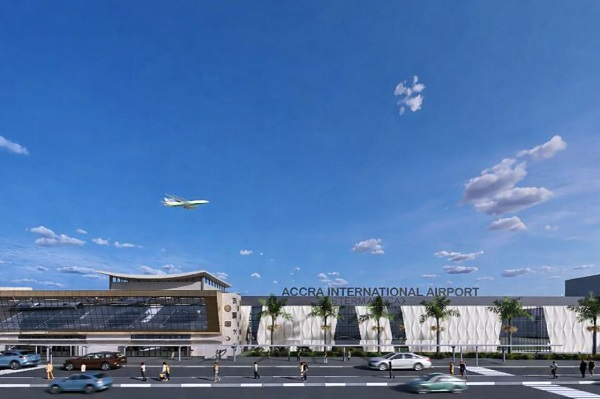
Understanding “Repurposing”
Following the completion of Terminal 3, international operations were migrated to Terminal 3, while domestic operations moved from Terminal 1 to Terminal 2.
After eight years of Terminal 3 operations, and consistent with earlier planning recommendations, GACL, with ministerial approval, initiated the repurposing of Terminal 2.
For clarity:
Repurposing refers to converting a facility from its original use to a different function in response to evolving operational needs.
In this context, Terminal 2 is being transformed from a domestic-only terminal into a dual-use facility (domestic and international).
The suggestion that GACL is mischaracterising refurbishment as repurposing is therefore misconceived and misleading.
Economic considerations
Concerns that the repurposing of Terminal 2 will undermine the return on investment of Terminal 3 are unfounded.
International operations generate higher revenue than domestic operations.
Expanding international capacity through Terminal 2 creates operational synergy with Terminal 3
This strategy supports Ghana’s ambition to become a competitive regional aviation hub
Legal and governance compliance
References to the Public Financial Management Act, 2016, and the Public Procurement Act, 2003, are noted; however, claims of potential breaches are purely speculative.
GACL affirms that: "All processes relating to Terminal 2, from 2013 to date, have fully complied with applicable procurement and financial management laws
Due process has been strictly followed at all contracting and execution stages"
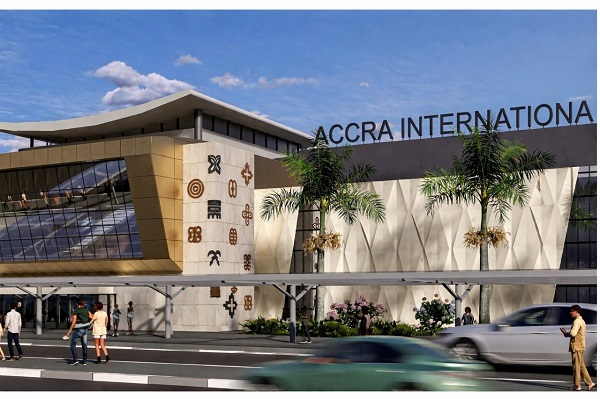
Security and infrastructure enhancements
Assertions that Terminal 2 lacks modern aviation systems are incorrect.
Even in its current state, Terminal 2 is equipped with:
• CCTV surveillance systems
• Baggage handling systems
• Biometric processing capabilities
Under the ongoing repurposing works, these systems are being significantly upgraded, including:
Introduction of 3D advanced screening scanners (allowing passengers to keep items such as laptops and liquids in their bags).
Enhanced passenger facilitation processes, including a reduced need for shoe removal.
These upgrades place Terminal 2 in line with modern global standards, with similar technologies already in use in parts of the United States, Europe, and Asia.
Transparency and public accountability
GACL remains committed to transparency and will respond to requests in accordance with the Right to Information Act.
Conclusion
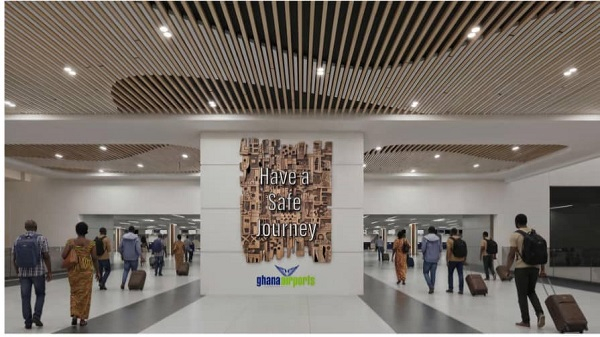
The repurposing of Terminal 2 is a strategic, cost-effective, and forward-looking decision that:
• Maximises existing infrastructure
• Supports increasing passenger traffic
• Avoids excessive capital expenditure associated with building a brand-new terminal immediately, while still servicing existing terminal loans
• Prevents prolonged operational disruption
As such, GACL remains focused on delivering a modern, efficient, and competitive airport system that meets Ghana’s growing aviation needs.
Business News of Friday, 10 April 2026
Source: gacl.com.gh
GACL corrects false information about petition to halt Terminal 2 works
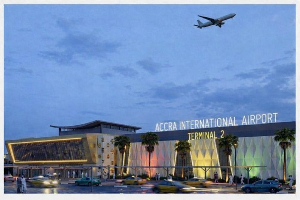 Kotoka International Airport Terminal 2 is undergoing expansions works