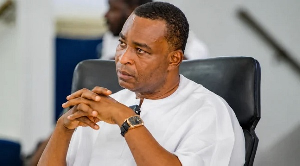
A Finance Professor at Andrews University, William Peprah, has urged government to rethink its approach to fuel price relief, stressing the need for a more structured plan that supports stability over a longer period.
His comment follows government’s announcement of a four-week suspension of some fuel-related taxes, with a possible review depending on movements in global oil prices, especially as tensions in the Middle East continue to influence the market.
During an interview on Joy News' The Pulse on Tuesday, April 14, 2026, Peprah explained that short-term interventions may offer temporary relief but are not a reliable solution for managing the economy effectively.
He noted that decisions on fuel pricing should not be taken in isolation but must be part of a wider economic strategy, including adjustments to the national budget and a careful review of public spending.
According to him, rather than reacting with weekly or monthly measures, government policy should focus on a medium-term window of about three to six months to provide better direction and certainty.
Here are the countries owing Nigeria for power supply
“The short-term proposal for four weeks is not feasible. The world is not going to end now,” he said, adding that global shocks, including conflicts and supply disruptions, often take months to stabilise.
Peprah further pointed out that even small disruptions on the global stage can have lasting economic consequences, reinforcing the importance of consistent and predictable policies.
At the same time, policy think tank IMANI Africa, alongside COPEC Ghana and the Institute for Energy Security, have proposed a reduction of GH¢1.65 per litre in fuel prices.
Despite these calls, Peprah insisted that any reduction in fuel costs must be matched with broader fiscal measures, particularly efforts to reassess government spending in light of potential revenue losses.
He warned that failing to coordinate such measures could increase the fiscal deficit and put pressure on the country’s 2026 budget goals.
“We must align our expected revenues with expenditure so that the 2026 targets can still be achieved,” he emphasized.
SO/SA
Business News of Wednesday, 15 April 2026
Source: www.ghanaweb.com
Fuel relief should extend beyond temporary measures – Peprah to government
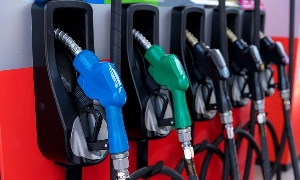 Photo of a fuel pump