The Minister for Food and Agriculture, Eric Opoku, has pushed back against a recent ultimatum from the Food and Beverages Association of Ghana, defending his ministry’s handling of the ongoing tomato supply crisis.
Speaking on Dwaso Nsem on Adom FM, the Minister expressed disappointment with FABAG’s position, suggesting the association may not be fully aware of efforts already underway to address the situation.
“If FABAG were following developments in the sector, they would not have made that statement or jumped to that conclusion. We have laid a solid foundation to address the challenge,” he said.
Scrap Agric Ministry if Ghana cannot produce tomatoes – FABAG
Opoku maintained that the ministry has not been idle and is actively working to stabilise tomato supply and support local production.
He emphasised that the government remains committed to solving challenges facing Ghanaians, particularly in the agricultural sector.
“We cannot sit idly by without addressing the challenges confronting our people. It is based on these same challenges that Ghanaians gave us the mandate to lead. We exist to solve them, and that is exactly what we are doing,” he stated.
In a bid to fast-track solutions, the Minister revealed that a crucial stakeholder meeting has been scheduled to bring key players together and strengthen ongoing interventions.
According to him, the goal is not only to manage the current shortage but also to build a more resilient system that ensures long-term self-sufficiency.
“Tomorrow, we will meet the necessary stakeholders to see how we can accelerate the process, manage the crisis, and intensify efforts to drive the nation toward self-sufficiency,” he noted.
However, he firmly rejected suggestions that the country could ramp up large-scale tomato production within 60 to 90 days, describing such expectations as unrealistic and disconnected from the realities of agriculture.
“It should not be the case that when there is a shortage of tomatoes, you expect production to begin immediately. It is not doable, and I am surprised they are speaking this way. At the very least, they should understand that those of us in the ministry are not ignorant,” he said.
The Minister further explained that agricultural production involves careful planning, investment, and time, factors that cannot be bypassed.
He cited infrastructure development, such as irrigation systems and boreholes, as processes that require procurement and due diligence before execution.
“If you want to provide boreholes across production centres, how many months will it take just to complete procurement processes?” he questioned.
“You cannot simply decide to drill boreholes without following due process,” he added.
He concluded by urging stakeholders and the public to approach the issue with a clear understanding of how the sector operates, calling for more measured and fact-based discussions.
“Let’s be reasonable and factual in our arguments. You cannot expect results without going through the necessary processes,” he added.
NA/MA
Business News of Tuesday, 24 March 2026
Source: www.ghanaweb.com
Eric Opoku pushes back on FABAG ultimatum over tomato crisis
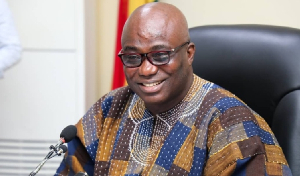 Eric Opoku, Minister for Food and Agriculture