Investors on the Ghana Stock Exchange (GSE) received approximately GH¢10.64billion in dividends in 2024, a 132.2 percent increase over the previous year, as improved corporate earnings and renewed boardroom confidence – particularly in the mining sector -sparked a notable rise in payouts.
The surge was largely underpinned by AngloGold Ashanti’s interim dividend of GH¢5.1billion, which alone accounted for nearly 48 percent of total market distributions.
Also, the overall number of listed companies paying dividends rose from 13 in 2023 to 17 in 2024 as a broadening base of payout activity coincided with deeper capital market participation.
The total figure is more than double the GH¢4.58billion recorded in 2023 and points to a notable rebound in listed company profitability following years of subdued earnings and capital conservation, especially following the domestic debt exchange and post-pandemic recovery period.
AngloGold’s outsized contribution significantly influenced the year’s aggregate growth. In addition to its GH¢5.1billion interim dividend, the miner paid a further GH¢924.5million in the first quarter.
Excluding AngloGold, however, total market dividends still rose by 20.8 percent as improvement in corporate fundamentals stretched beyond the mining sector.
“Dividend payment is very crucial. Our market moves on dividends and strong financials. Once dividends are announced, share prices begin to move upward until the payment date. After that, they tend to flatten until the next earnings release,” Kofi Kyei Busia, an investment analyst, said in commentary on the development.
Mr. Busia noted that unlike in more developed markets where investor behaviour is often guided by interest rate shifts or geopolitical concerns, trading activity on the GSE remains strongly linked to dividend declarations and perceived earnings strength.
Sectoral analysis
In 2024, the mining, financial services and consumer goods sectors led dividend distributions. Mining companies contributed over 56 percent of total dividends, up from 35.9 percent in 2023. This was driven for a fair degree by elevated gold prices and robust earnings.
Financial institutions accounted for 32.6 percent, down from 48.8 percent the previous year, while consumer goods firms made up 30.5 percent of the total.
Among financial stocks, GCB Bank posted the largest increase in dividend per share (DPS), rising 4,445 percent from GH¢0.022 to GH¢1. Total Petroleum lifted its DPS by 254.4 percent to GH¢2.5665 while MTN’s dividend rose 37.1 percent to GH¢0.24. Other significant increases came from Fan Milk and AngloGold.
Not all firms recorded gains, however. Standard Chartered Bank reduced its DPS by 43.3 percent to GH¢1.6704 while Benso Palm Plantation cut its payout by 9.8 percent. GOIL maintained its dividend at GH¢0.056 per share, unchanged from 2023.
The divergence in payouts, Mr. Busia noted, reflects varied earnings outcomes, differing capital strategies and regulatory constraints across industries.
Sustainability?
Dividend yields revealed further disparities as Camelot and Clydestone posted market-high yields of 48.29 percent and 40 percent respectively, after prolonged period of dividend payout dormancy. There is caution regarding how sustainable this earnings capacity is.
More established stocks such as GCB Bank and MTN Ghana offered moderate yet stable yields of 10.5 percent and 8 percent, appealing to income-focused investors seeking both return and capital stability.
AngloGold’s interim yield stood at 27.41 percent.
Payout ratios further illustrate divergent strategies with Total Petroleum distributing 87.86 percent of its earnings and Unilever Ghana 54.74 percent, while Enterprise Group and Ecobank Ghana retained over 90 percent – an indication of reinvestment priorities and long-term growth orientation.
“Some clients actively buy shares just to capture the dividend,” Mr. Busia noted.
“After the payment, they may hold or sell depending on their investment strategy. Such behaviour has become more visible this year,” he added.
Resumptions by previously conservative firms such as Ecobank and Access Bank, both of which paid no dividends in 2023, suggest improving confidence and more resilient balance sheets. Ecobank paid GH¢109.67million and Access Bank GH¢154.64million, while Clydestone and AngloGold’s Q1 distributions were GH¢1.09million and GH¢924.5million respectively.
Stocks such as GCB, MTN Ghana and Total Petroleum may offer a balance of predictable income and price stability, while companies like Enterprise Group and Ecobank Ghana offer reinvestment-led growth with lower immediate yields.
The record dividend payouts in 2024 reflect a more optimistic outlook for Ghana’s capital markets, though driven in part by outliers.
“Ghana’s stock market is performing well by its own standards. That is something we should understand and build upon not just celebrate,” Mr Busia said.

Business News of Monday, 21 July 2025
Source: thebftonline.com
Equity investors on GSE reap GH¢10.64 billion in 2024 dividends
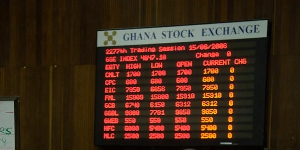 Investors on the Ghana Stock Exchange (GSE) received approximately GH¢10.64billion in 2024




Entertainment