Stakeholders in the country’s cocoa sector have intensified preparations towards the implementation of the European Union Deforestation Regulation (EUDR), as industry players met in Accra to discuss compliance measures ahead of the December 2026 deadline.
The 4th EUDR Multi-stakeholder event aimed at deepening collaboration among stakeholders, strengthen awareness of the regulation and promote sustainable cocoa production practices ahead of the deadline for compliance.
The EUDR requires exporters of commodities such as cocoa, coffee, palm oil, rubber, soy, wood and beef to the European market to prove that their products are not linked to deforestation and are fully traceable to their source.
The event brought together representatives from government institutions, cocoa buying companies, exporters, development partners, civil society organisations and farmers to discuss the country’s level of preparedness, implementation challenges and the support needed to help producers comply with the regulation.
The EU Ambassador to Ghana, Rune Skinnebach, speaking at the event described deforestation as a global challenge that threatens climate, livelihoods and the future of cocoa production, adding that the EUDR was introduced to promote the consumption of deforestation free products and reduce the impact of global trade on forest degradation.
According to him, cocoa accounts for about 95 percent of the export value of the seven commodities covered under the regulation, making the cocoa sector central to implementation efforts.
He stressed the importance of continued dialogue among stakeholders, saying cooperation between producer and consumer countries was necessary to build sustainable supply chains while protecting forests.
Furthermore, he lauded efforts by COCOBOD and the Forestry Commission to establish a traceable and transparent cocoa supply chain, saying the country had made significant progress toward compliance.
“EUDR is a shared opportunity, as producer and consumer countries work together to build sustainable, transparent supply chains while protecting our precious forests. Ghana’s progress in aligning national systems with the EUDR is commendable, and we value in particular the strong collaboration with COCOBOD and the Forestry Commission,” also noted.
Skinnebach said although implementation of the regulation had been delayed, the European Commission remained committed to the December 2026 deadline and had introduced measures to simplify implementation.
Delivering a welcome address on behalf of COCOBOD Chief Executive Dr Randy Abbey, the regulator’s Deputy Director for Monitoring and Evaluation, Eric Amengor, stated that the relationship between the European Union and the cocoa sector has remained mutually beneficial over the years
He noted that cocoa remained a strategic national asset that supports millions of farmers and contributes significantly to the economy, making it important for the sector to maintain access to international markets while safeguarding forests.
Furthermore, he said the country had already fully operationalised the Ghana Cocoa Traceability System despite the postponement of the regulation’s implementation date.
“We have put in place a system and measures that will enable companies meet their obligations under the EUDR, including cocoa traceability and deforestation risk assessment, and we are committed to supplying the EU market with compliant cocoa.” Dr Abbey said in the address.
He, however, acknowledged that logistical challenges still remained and called for continuous collaboration among stakeholders to ensure a smooth implementation process.
The Forestry Commission also used the opportunity to launched a 2020 forest cover map for cocoa areas, aligned with UN FAO standards to meet EUDR requirements.
Deputy Chief Executive of the Forestry Commission, Elikem Kotoko, said the map would provide reliable data to help assess deforestation risks and ensure cocoa production aligns with national and international sustainability standards.
Kotoko who spoke on behalf of the CEO of Forestry Commission, Dr Hugh Brown, added that the EUDR was major step in global efforts to fight deforestation and promote responsible sourcing.
He said that the workshop was important as it would help stakeholders understand the regulation and strengthen compliance within the cocoa sector.
Business News of Wednesday, 27 May 2026
Source: thebftonline.com
Cocoa industry steps up EUDR readiness efforts
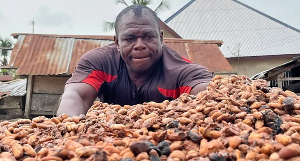 Cocoa is a key export commodity for Ghana