After months of strong gains, the Ghanaian cedi is projected to encounter seasonal pressures and market corrections, with its value likely to settle between GH¢13.5 and GH¢14 to the US dollar before the close of 2025.
This is according to economist, Professor Godfred Bokpin, who expressed his confidence in the economy's performance despite the currency's recent volatility.
According to him, the shifts in the cedi are a reflection of natural market cycles.
“We have our peak period and then we have our low period as well. During the peak, cash flow mismatches occur, with inflows versus outflows. Around Christmas, for instance, imports increase and demand picks up,” he explained.
Local currency holds at GH¢12.25 to the dollar
Government expenditure during this period, he added, could also heighten pressure on the local currency.
In the first half of the year, it staged a remarkable rebound, appreciating by about 40.5% against the dollar by May 2025, largely buoyed by debt restructuring, easing inflation, and improved investor confidence.
Professor Bokpin, however, warned that this appreciation was “unsustainable” and had run ahead of the pace of economic recovery.
He also raised concerns about the “wide divergence” in exchange rates across banks, forex bureaus, and the black market, noting that the gap fuels speculation.
He called on the Bank of Ghana to step in to harmonise the market and strengthen transparency.
Professor Bokpin further advised against what he described as Ghana’s fixation on the daily exchange rate.
“It has come to dominate our economic conversations more than it should,” he said.
Despite short-term currency pressures, Ghana’s macroeconomic data point to recovery.
Inflation eased to 11.5% in August 2025, the lowest level in nearly four years, while GDP expanded by 6.3% in the second quarter, led by growth in services.
These developments, Professor Bokpin stressed, indicate that Ghana has moved beyond the peak of its economic crisis.
SSD/SA
Watch the latest edition of BizTech below:
Business News of Friday, 19 September 2025
Source: www.ghanaweb.com
Cedi's rapid appreciation 'jumped the gun,' market now adjusting - Prof Bokpin
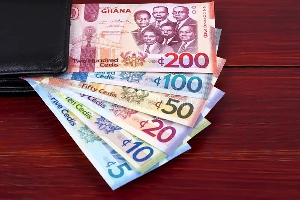 A photo of cedi notes