Government is set to establish a GH¢2billion price stabilisation fund to support key commodities including cocoa, maize, shea and groundnuts, as part of efforts to curb price volatility and stabilise the economy.
The fund, will be deployed into the market during periods of price surges to cushion consumers and moderate inflationary pressures.
In collaboration with the Ghana Commodity Exchange and National Buffer Stock Company, the intervention is also expected to enhance liquidity for farmers, provide guarantees for aggregators and promote more structured commodity trading.
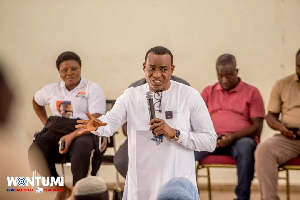
Speaking at the two-day National Market Actors’ Forum held in Tamale, a representative of the Chief Executive Officer – 24-Hour Economy Secretariat, Augustine Goosie Tanoh, said the initiative forms part of broader efforts to restore macroeconomic stability.
Abdul-Nasser Alidu, Head of Strategy and Programmes at the Secretariat, noted that Ghana’s economy has in recent years been characterised by high fiscal deficits, rising public debt, elevated inflation and rapid depreciation of the cedi.
He explained that the 24-hour economy programme aims not only to restore debt sustainability but also reduce food price volatility, which remains a major driver of inflation.
Airfares rise as Ghana implements new airport infrastructure levy
“The programme’s essence is to reduce fluctuations in food pricing, as a significant portion of inflation in Ghana is food-driven. Managing food inflation is critical to stabilising the broader economy,” he said.
The forum, organised by World Vision Ghana under its THRIVE 2030 Project and themed ‘Partnering for prosperity: Strengthening market linkages for all’, brought together producers, processors, investors, policymakers and other stakeholders within the agricultural value chain.
The initiative seeks to strengthen market linkages, promote transparent pricing and structured trading, reduce post-harvest losses and improve incomes for smallholder farmers.
Funded in partnership with the Ghana Commodity Exchange and VisionFund, the THRIVE 2030 programme is an eight-year economic empowerment strategy aligned with the United Nations Sustainable Development Goals – particularly those relating to poverty reduction, gender equity and decent work.
Also addressing the forum, Dr. Peter Boamah Otokunor, Director of Presidential Initiatives in Agriculture and Agribusiness at the Office of the President – reaffirmed government’s commitment to supporting policies aimed at boosting industrialisation and economic growth.
He identified infrastructure deficits as a major constraint to policy implementation and highlighted ongoing interventions, including the construction of feeder roads to farming communities, development of storage facilities, irrigation systems and provision of power for agro-processing.
According to him, these investments are essential to reducing post-harvest losses, enabling value addition and attracting private-sector participation in agricultural markets.
Dr Otokunor further disclosed plans to introduce a digital out-grower system that provides farmers with access to inputs such as seeds, fertilisers and mechanisation services on credit – with repayment structured for post-harvest.
The system, he said, will incorporate data-driven traceability mechanisms to enhance credibility and facilitate smallholder participation in formal markets.
He added that aggregation centres, digital trading platforms and integrated commodity networks will be established to link producers directly with processors and buyers, thereby improving price discovery and minimising inefficiencies associated with intermediaries.
With smallholder farmers accounting for about 95 percent of agricultural producers, he stressed the need for farmer service centres and stronger private-sector participation in input distribution to ensure wider reach and impact.
He called for sustained collaboration between government and the private sector to unlock the full potential of Ghana’s agricultural value chains and drive inclusive economic growth.
Business News of Thursday, 2 April 2026
Source: thebftonline.com
24-Hour Economy drive to restore stability
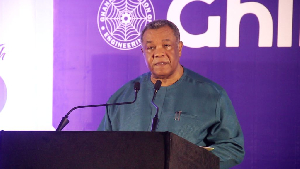 Goosie Tanoh, Presidential Advisor on the 24-Hour Economy