Data shared by the Bank of Ghana has revealed the significant impact of the gold purchasing programme to boost the bank’s gold reserves.
The programme, introduced by former Vice President of Ghana, Dr Mahamudu Bawumia, in the height of Ghana's economic crisis, was meant to shore up the country's foreign exchange reserves and help stabilise the falling local currency as well as rising cost of fuel.
As envisaged by the former vice president, the programme indeed significantly boosted the Bank of Ghana's gold reserves and ultimately the forex reserves, thereby halting the cedi depreciation and ensuring stability of the fuel prices through the “Gold for Oil” policy.
Latest post by the Bank of Ghana of a monthly breakdown of Ghana's gold reserves addition reveals Ghana's total gold reserves at the time Bawumia launched the programme in May 2023 was 8.78 tonnes.
Between May 2023 and December 2024, the country’s gold reserves had shot up from 8.78 tonnes to 30.53 tonnes marking a whopping 21.75 tonnes increment.
Between January 2025 and the end of June 2025 under the incumbent NDC government, only 2.45 tonnes have been added, taking Ghana's total gold reserves from the 30.53 inherited to 32.99 tonnes.
From the Bank of Ghana data, out of Ghana's current total gold reserves, 8.78 tonnes, representing 26.6%, were amassed since independence while 21.75 tonnes, representing 66%%, was accrued under the erstwhile New Patriotic Party administration within 18 months while 2.46 tonnes, representing 7.4 %, have been accrued by the Mahama administration in 6 months.
Meanwhile, in the first six months after the launch of the programme in May 2023, 9.41 tonnes were added.

AME
Business News of Thursday, 10 July 2025
Source: www.ghanaweb.com
BoG confirms Ghana increased its gold reserves by 66% under Bawumia's 'Gold Purchase Program'
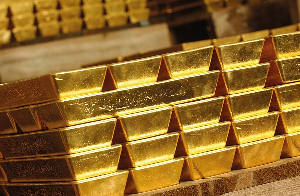 File photo of gold bars