Apparel manufacturers and policy stakeholders are calling for stronger local content rules in national apparel procurement to propel the sector's growth.
They proposed a binding framework for state procurement of apparel, emphasising that such a framework was crucial for boosting domestic production, creating jobs, and reducing the country’s dependence on imported garments.
The call was made at a national dialogue on local procurement of apparel, garments and textiles, in Accra, on Thursday, December 4, 2025.
Data from the International Labour Organization (ILO), indicates that Ghana spends over $200 million annually on imported garments.
Also, public procurement makes up over 20 per cent of Ghana's GDP, according a 2021 Ministry of Finance figures.
Speaking at the dialogue, the President of the Association of Ghana Apparel Manufacturers (AGAM), Nura Salifu, said strategic procurement, especially by state institutions, was critical in driving industrial transformation and growing the sector.
She explained that while the Public Procurement Act provided preference margins, it doesn’t mandate procuring agencies to buy from Ghanaian-owned manufacturers.
A loophole, she said, must be addressed to ensure that demand translated into local production, jobs and GDP growth.
She also stressed the importance of a stronger local sourcing regime to reduce the cost of production.
"With local manufacturers already supplying international markets, if we’re given this opportunity, we’ll not just create jobs, we will contribute significantly to our economy.” she added.
German Development Cooperation concludes program to boost Ghana's garment industry
She, however, commended the current government for showing keen interest in the sector by ensuring that banks such as the Eximbank and the Development Bank Ghana supported the operations of apparel manufacturers.
“There's been a real shift in not just the conversation, but in ensuring that this is actualised, and so there's a real seriousness with making sure that this will be captured. And it has, in fact, been captured in the 2026 budget, and so we're hoping that AGAM will definitely get a piece of the pie. We have the capacity to produce,” she noted.
Speaking in the same vein, an Economist at the Ghana Employers’ Association, Kingsley Laar, also called for a viable Local Procurement Policy, stressing that such a policy must be accompanied by measures to reduce production costs and stabilise the value chain.
“High electricity tariffs, logistics costs and imported raw materials continue to erode competitiveness,” he said.
He also called for a structured enterprise-upgrading programme for SMEs, explaining that many SMEs lacked the machinery, capital and certification required to compete for large contracts.
Governance and policy direction
The Deputy Minister of Trade, Agribusiness and Industry, Sampson Ahi, emphasised the government’s commitment to supporting the sector, reiterating that government had already allocated funding to establish three new garment factories and formed a working group to ensure that Ministries, Departments and Agencies procure locally made uniforms and fabrics.
He highlighted ongoing efforts to strengthen local raw material production to meet AfCFTA rules of origin, citing global examples, such as South Korea, the United States and Malaysia.
“Imagine a Ghana where every school uniform, military fatigue, hospital linen and ceremonial robe proudly bears the Made in Ghana label. When the government spends with purpose, it does not merely buy goods, it builds industries, creates jobs, and secures economic sovereignty,” he added.
SP
All you need to know about Ghana's new vehicle number plates |BizTech:
Business News of Monday, 8 December 2025
Source: www.ghanaweb.com
Apparel manufacturers demand stronger local content rules in state procurement
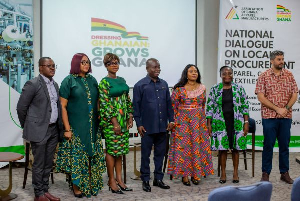 Apparel manufacturers and policy stakeholders in a group photo at the event