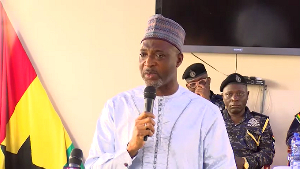
The President of the Association of African Sustainability Practitioners (AASuP), Humphrey Tetteh, has raised concerns over Africa's slow progress in achieving the United Nations Sustainable Development Goals (UNSDGs).
According to Tetteh, out of the 32 areas outlined by the UN, Africa has made notable progress in only three, while most others remain stagnant or are regressing.
Speaking to GhanaWeb Business on the sidelines of the First Stakeholders’ Meeting on the Sixth Africa Sustainability Report and the Think Energy SDG Awards on August 28, 2025, Tetteh noted that sustainability and climate issues have evolved globally from mere advocacy to an era of accountability, where countries and industries are now expected to back environmental commitments with legislation.
“Sustainability and climate-related issues have moved from just advocacy to accountability. And when it comes to accountability, what it means is that we need to have laws or regulations guiding us in practice. And Africa hasn’t got it. We don’t have any ESG law in the whole of Africa,” he stated.
He explained that while some African countries have developed environmental guidelines through agencies like the Environmental Protection Agency (EPA), these remain non-binding and largely ineffective.
AASUP partners with SIGA to strengthen ESG compliance in Ghana's public sector
Tetteh called for proper legislation and enforcement mechanisms to help Africa meet the UN’s SDG targets.
“We need to have a law that mandates all of us to reduce our greenhouse gas emissions by a certain percentage every year leading up to 2030. That’s what Africa hasn’t got. What we are still doing is advocacy, advocacy. We haven’t moved into the accountability side of climate change. For me, and for the association, that is the greatest worry. We are going to spend most of our resources on empowering communities to really embrace accountability,” he added.
Building capacity for sustainability
The Vice-Chancellor of the University of Energy and Natural Resources (UENR), Professor Elvis Asare-Bediako, for his part, emphasised the importance of the initiative in bringing stakeholders and industry experts together to interrogate data, refine strategies, and ensure that both the report and the awards reflect Africa’s realities while pointing toward actionable solutions.
He noted that Ghana continues to demonstrate strong commitment to the SDGs, particularly in the areas of energy access, renewable energy development, climate resilience, and natural resource management.
His remarks come as the international community intensifies calls for accelerated climate action ahead of the 2030 SDG deadline, with Africa under pressure to make significant progress within the next five years.
Business News of Friday, 29 August 2025
Source: www.ghanaweb.com
Africa risks missing 2030 SDG deadline without climate laws - AASuP
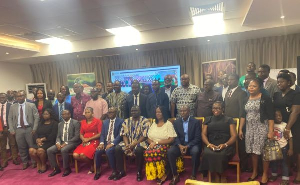 Stakeholders at the first meeting on the Sixth Africa Sustainability Report