Fuel prices in Ghana are among the most closely watched indicators of economic wellbeing, influencing the cost of transport, food, and nearly every aspect of daily life.
An increase at the pump quickly translates into higher fares, rising prices of goods and services, and increased cost of living. While commuters and road users often loathe such hikes, the reality is that fuel prices are shaped by a complex mix of global trends, local economic conditions, and government policy.
For instance, the World Bank projects crude oil prices to average $64 per barrel in 2025, according to its April 2025 Commodity Markets Outlook.
This represents a significant drop from the $80.70 per barrel average in 2024. Looking ahead, the Bretton Woods institution expects prices to fall further, forecasting an average of $60 per barrel in 2026 if current market trends persist.
As of Monday August 25, 2025, Brent crude is trading at approximately $67.76 per barrel at 10:54AM GMT, while the West Texas Intermediate (WTI) stands at around $63.73 per barrel, according to oilprice.com.
So, what actually determines the price at the pump? GhanaWeb Business takes a look at the five biggest factors that shape fuel prices in Ghana and how much these estimates contribute.
GRA begins implementation of D-Levy, fuel price surges to GH¢12.59
• World market crude oil prices (estimated at 35%-40%)
Although Ghana can boast of having vast oil resources, the country largely imports most of its refined petroleum products, so international crude oil prices directly affect local pump prices. Therefore, a spike in global oil prices means consumers would pay more, while a drop eases pressure on local prices.
This component alone forms about one-third to two-fifths of the final cost.
• Exchange rate (Cedi-Dollar performance) (estimated at 10%-15%)
For instance, fuel is traded in US dollars, making the strength or weakness of the Ghana cedi a crucial factor in the pricing of the commodity. Even if global oil prices are stable, a depreciating cedi increases the cost of imports, adding up to around 10-15% of the price at the pump. Conversely, when the cedi stabilises, consumers enjoy some form of relief based on the prevailing economic conditions.
• Taxes and Levies (estimated at 35%-40%)
Government policy, by way of the imposition of taxes and levies, form one of the largest components of fuel prices in Ghana. These include the Energy Sector Levy, Road Fund Levy, Special Petroleum Tax, Price Stabilisation Levy, and Energy Debt Recovery Levy. Together, they account for about a third to 40% of the pump price, making taxation one of the biggest drivers of fuel costs in Ghana.
See prices of fuel at the pumps as of August 18
For most fuel consumers, debates often arise about whether reducing these levies could ease the burden on them.
• Local market competition and deregulation policy (estimated at 8%–10%)
Since 2015, Ghana has operated under a deregulated petroleum pricing regime, allowing Oil Marketing Companies (OMCs) to set fuel prices independently, rather than having them fixed by the government. However, Bulk Distribution Companies (BDCs) also play a significant role in determining ex-pump prices.
These BDCs are responsible for managing exchange rate risks and pricing margins, both of which contribute significantly to the final pump price.
While global market prices and taxes account for the majority of the cost, margins from OMCs, BDCs, and dealer mark-ups add an additional 8–10% to the final price.
That said, market competition among OMCs can sometimes push prices slightly lower, as companies attempt to attract and retain customers.
• Transportation, distribution and storage costs (estimated 5%-7%)
Getting fuel from depots to filling stations comes at a cost as charges for bulk distribution, depot handling, and long-haul transportation all add up to about 5-7% of the final price. Additionally, supply disruptions or inefficiencies in this chain can quickly push prices higher for consumers.
In sum, around 70-75% of fuel prices in Ghana are shaped by world market trends and government taxes/levies, while the remaining share comes from exchange rate movements, OMC margins, and distribution costs mainly from the Bulk Oil Storage and Transportation (BOST) system.
For the average consumer, this means that fuel pricing is not only a local matter but also deeply tied to global markets and government policy choices at home.
MA
GhanaWeb's latest documentary, Sex for Fish, that explores the plights of teenage girls in coastal communities, all in an attempt to survive, is out. Watch it below:
Business News of Monday, 25 August 2025
Source: www.ghanaweb.com
5 things that shape the price of fuel in Ghana
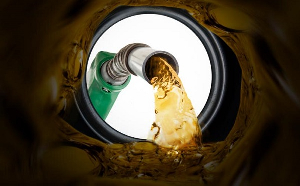 File photo of fuel pump