About 26 million citizens remain at risk due to their dependence on traditional cooking fuels, such as charcoal and firewood—a growing threat to both public health and the environment.
This warning was echoed by stakeholders during the German Embassy’s Climate Talks 2025, held in Jamestown, Accra, with a call to action for a national shift towards clean cooking solutions.
Currently, about 75 percent of Ghanaian households rely on solid biomass fuels for cooking—a situation experts describe as a looming public health and environmental crisis.
This is because high dependence on charcoal and firewood contributes significantly to household air pollution, deforestation, and increased greenhouse gas emissions.
Environmental implications
Speaking on the environmental implications, Deputy Director of A Rocha Ghana, Daryl Bosu, emphasised that the country is losing about 2 percent of its forest cover annually to deforestation, mainly due to large-scale extraction of wood for charcoal production.
“An estimated 14.9 million tonnes of trees are felled annually for charcoal and firewood. At this pace, we risk losing forests in key charcoal-producing regions within two decades.
“Close to 70 percent of households in Ghana depend on either charcoal or firewood. That is roughly about 26 million people. This is not only an energy issue—it is a serious environmental and health challenge,” he noted.
Mr Bosu warned that, if the current trend continues unchecked, Ghana could lose vast portions of its forests within the next two decades.
Health implications
On the health front, Dr Richard Bright Danyoh of the Ghana Paediatric Society described unclean cooking as a “real and visible killer”—saying exposure to smoke from traditional cooking fuels is equivalent to smoking two packs of cigarettes daily.
He cited World Health Organisation (WHO) data showing that household air pollution is responsible for 2.5 million deaths globally each year, exceeding deaths from malaria, HIV/AIDS, and tuberculosis combined.
“The effects are severe, especially for pregnant women and young children. We’re seeing increased rates of asthma, allergies, pneumonia, and even congenital malformations. About 52 percent of birth defects may be linked to household air pollution from unclean cooking.
“In Ghana alone, household air pollution leads to about 16,000 premature deaths annually. Women and children are the most vulnerable. Babies exposed to smoke during pregnancy may be born with developmental issues,” Dr Danyoh explained.
He called on the health sector to become more proactive in the fight for clean cooking by integrating it into health education.
“Prescription does not end with medication. Prescribing clean air is one of the best medicines,” he urged.
Steps
In response to these risks, Chairperson of the Ghana Alliance for Clean Cooking (GHACCO), Sarah Naa Dedei Agbey, stressed that the country has made some progress but needs to accelerate its efforts.
GHACCO, established in 2012 following a World Bank dialogue, has been instrumental in raising awareness and pushing for policy reforms.
“When we began, 85–90 percent of Ghanaians were using biomass for cooking, and LPG penetration was as low as 15 percent. Today, thanks to public-private interventions and civil society advocacy, we are seeing improvements. But we must now take giant steps. Clean cooking is not a luxury—it is a right,” Ms Agbey stated.
She disclosed that the country is in the final stages of developing a Clean Cooking Policy and Strategy, including an investment prospectus to determine the financial commitment needed to scale up clean cooking access across the country.
Public-private partnerships
From the private sector perspective, Portfolio Manager at Green Wangara Ventures, Kwabena Owusu-Sarfo, highlighted the need for blended financing and patient capital to scale clean cooking ventures.
“This sector faces fragmented supply chains and high initial costs. Most investors want high returns, but clean cooking businesses often have lower margins. We need to de-risk these investments to attract private capital,” he noted.
Mr Owusu-Sarfo advocated stronger public-private partnerships to bridge financing gaps and create demand for cleaner cooking options.
Adding to this, Director of the Institute for Sustainable Energy and Environmental Solutions (ISEES), who also serves as a cookstove entrepreneur, Lovan Owusu-Takyi, pointed to financing as the biggest hurdle for manufacturers and consumers alike.
“Banks will not lend to clean cooking businesses, but grants and incubation hubs, like the Ghana Climate Innovation Centre and GIZ’s projects, have helped. Still, we need long-term, low-cost financing to scale production and reach rural users,” he emphasised.
Mr Owusu-Takyi also noted that affordability on the demand side must be addressed through community savings models and microfinance.
“The end-users of clean cookstoves often cannot pay upfront. We have introduced ‘save-to-own’ models that help people acquire improved stoves over time. Carbon financing could also help manufacturers lower costs,” he added.
Climate Talks
German Ambassador to Ghana, Daniel Krull, commended the dialogue’s impact and reaffirmed Germany’s commitment to supporting Ghana’s green transition.
“I was shocked by the health data. This goes beyond climate—it’s about saving lives. Awareness is important, but we must now focus on solutions, especially financing. The upcoming Clean Cooking Strategy is a step in the right direction,” he said.
The Climate Talks series, an initiative of the German Embassy in Ghana and Joy News, aims to deepen public understanding of climate challenges and create space for collaborative action towards the country’s Nationally Determined Contributions (NDCs).
The next session is expected to move beyond Accra to engage communities in other regions and climate-vulnerable areas.
Business News of Tuesday, 20 May 2025
Source: thebftonline.com
26 million people at risk without adopting clean cooking solutions
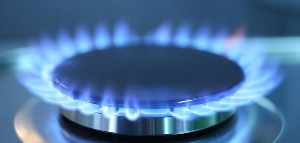 The warning was echoed by stakeholders during the German Embassy's Climate Talks 2025

![Wontumi allegedly appeared emotional and requested for water [This image is AI generated]](https://cdn.ghanaweb.com/imagelib/pics/975/97547141.295.jpg "Wontumi allegedly appeared emotional and requested for water [This image is AI generated]")