The Government has laid the foundations for the 24-hour economy policy, with job creation now the focus of the next phase of implementation, George Kweku Ricketts-Hagan, a member of Parliament’s Finance Committee, has said.
Ricketts-Hagan, who is also Board Chairman of the Ghana Revenue Authority (GRA) and a former Deputy Finance Minister, said this in an interview with the Ghana News Agency on the sidelines of the recently concluded International Monetary Fund (IMF)/World Bank Group annual meetings in Bangkok, Thailand.
He said the economy had been stabilised, and the task ahead was to translate the gains into jobs, particularly for the country’s youthful population.
Launched in July 2025, the 24-hour economy policy seeks to boost productivity and industrialisation across multiple sectors, promote self-reliance and export-led growth, and create jobs through round-the-clock economic activity.
Some economic watchers have raised concerns about the implementation of the proposed three-shift system, a key component of the policy, and called for annual budgetary allocations and a phased approach to its execution.
Ricketts-Hagan said the initiative was a long-term undertaking that required careful planning, adding that the 24-hour Economy Secretariat had laid the groundwork for its implementation.
“We probably did not comprehend the enormity of the initiative, but it’s not something that’s supposed to be short-term. It’s long-term, so it has to be planned properly. What the 24-hour Economy Secretariat has done is that they’ve put the building blocks in,” he said.
The next phase would build on those foundations to achieve the policy’s employment and economic growth objectives.
He identified reliable energy supply, business incentives and ready markets for goods and services as essential requirements for the policy’s success.
Tax reductions and reliable energy supply, he said, would encourage businesses to operate continuously, noting that tax incentives alone would be insufficient without adequate power.
On job creation, Ricketts-Hagan expressed optimism that the proposed US$10 billion New Economy policy, expected to be introduced in 2027, would help address youth unemployment.
He said the framework would prioritise targeted growth and direct government spending towards sectors capable of generating sustainable employment.
“I do not want to pre-empt the Finance Minister, but the New Economy will build on existing reforms and focus on growing the economy in a manner that creates sustainable employment,” he said.
Business News of Friday, 23 October 2026
Source: GNA
24-Hour Economy foundations laid, jobs next – Ricketts-Hagan
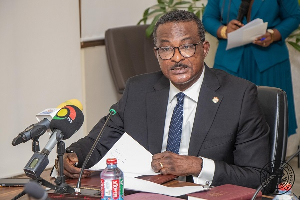 George Kweku Ricketts-Hagan, Board Chairman of the Ghana Revenue Authority








Opinions