The Chief Executive Officer of the Ghana National Chamber of Commerce and Industry (GNCCI), Mark Badu-Aboagye, has stated that the recent drop in inflation, while commendable, is not sufficient to transform the structure of Ghana’s economy.
According to him, the business community must benefit from the lower inflation rate through reduced credit costs and cheaper electricity.
Speaking in response to the launch of the 24-Hour Economy policy and the recent decline in inflation, he said, “Launching a 24-hour economy will not change the harsh business environment we are currently facing,” as quoted by myjoyonline.com.
On inflation, he noted, “It is a good start, but it’s not enough. Reducing inflation to 13.7% is a necessary condition, but not sufficient to restructure the economy.”
The GNCCI boss emphasised that the decline in inflation should be reflected in the prices of key manufacturing inputs to bring about real price reductions in the market.
“We want to see how the lower inflation will reduce the cost of credit. We want to see how it will reduce the cost of utilities, electricity and water. These are critical components in manufacturing,” he explained.
“In Ghana, the cost per kilowatt hour for manufacturing companies, which ranges from 12 to 15 cents, is among the highest. Elsewhere, it is less than five cents per kilowatt hour,” he added.
Badu-Aboagye strongly advocated for a reduction in utility costs.
“If we truly want to scale up manufacturing, we need to reduce the cost of utilities and the cost of credit. No company can manufacture, export, and remain competitive under the current conditions,” he said.
He also aligned with President Mahama’s view that the 24-Hour Economy policy is not merely about extending working hours but about enhancing productivity and boosting exports.
“The 24-hour economy is not only for local consumption. If it were just for local consumption, we wouldn’t need a 24-hour economy, we already produce enough to feed ourselves. The goal is to export, which is why accelerated export is a key component of the 24-hour economy,” he noted.
“But when you send your products abroad, people won’t buy them just because they’re from Ghana or because you’ve launched a 24-hour economy. They will buy them because they are competitive and of high quality,” he concluded.
SSD/MA
Cheque Fraud EXPOSED: How it works and how to stay safe
GhanaWeb Special: The gold market that fuels galamsey
Business News of Tuesday, 8 July 2025
Source: www.ghanaweb.com
13.7% inflation drop is insufficient to change the economy - GNCCI boss
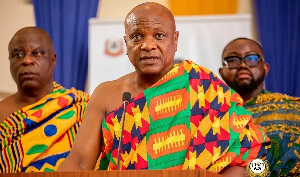
 Mark Badu-Aboagye is the CEO of GNCCIA