


President Donald Trump don tell reporters e intend to appeal after one federal judge for Seattle temporarily block im attempt to end birthright citizenship for US.
US District Court Judge John Coughenour call Trump executive order "blatantly unconstitutional" and issue restraining order wey block am from going into force after a 25-minute hearing on Thursday.
Under one long-standing interpretation of di 14th Amendment to di Constitution, nearly anyone born inside di US dey get automatic citizenship.
Trump hope to end dat rule for children wey dey born to parents who dey for di country illegally or temporarily.
Four states - Washington, Arizona, Illinois and Oregon - ask make dem pause di order while di federal court dey chook eye for di states legal challenge.
During arguments, Judge Coughenour ask lawyer for di Trump administration say "where di lawyers dey " wen Trump team dey draft di executive order, and scold am for im claim say di order dey constitutional.
"e dey burst my mind," di judge tok.
Di executive order go dey put on hold for 14 days pending further legal proceedings.
Trump, wey don issued plenti unilateral actions since e return to di US presidency on Monday, don for long promise to make dis particular change.
Im executive order call on US government departments and agencies to deny di granting of citizenship to di children of migrants who either dey for US illegally or on temporary visas.
E for apply to children wey dem born on 19 February and onwards, according to legal filings for di case by di Department of Justice (DoJ).
Reports bin dey say di administration bin dey plan to enforce di order by withholding documents, such as passports, from people wey dem say no qualify for citizenship.
Di judge order also put a temporary stop to any enforcement of di order by federal agencies.
For dia lawsuit, di four states challenging di order argue say di 14th Amendment and US law "automatically give citizenship upon individuals dem born for di United States" and say di president no get di power to amend di Constitution.
Dem add say if di order dey implemented, residents of those states go "suffer immediate and serious harm".
"Di individuals wey dem go collect dia United States citizenship from dem go become undocumented, subject to removal or detention, and many go dey stateless," di lawsuit tok.
Trump Department of Justice argue say di case wey di states bring no warrant di "extraordinary measure" of a temporary restraining order, but di judge disagree.
Di 14th Amendment, wey dem adopt for 1868, state in part say: "All persons born or naturalized for di United States, and subject to di jurisdiction thereof, be citizens of di United States".
Di DoJ argue say di clause "and subject to di jurisdiction thereof", exclude children of non-citizens wey dey di US unlawfully, and add say di order na "integral part" of Trump' goal to address di country "broken immigration system and di ongoing crisis for di southern border".
Na 255,000 children dem born to undocumented mothers for US in 2022, according to di states legal challenge.
Di amendment don dey interpreted by courts as granting citizenship to anyone dem born on US territory, with very limited exceptions such as di children of foreign diplomats.
Without a direct amendment to di US Constitution - wey require a two-thirds vote in both chambers of Congress, plus di approval by America states - experts say di issue dey likely to ultimately dey decided by di courts.
Lawyers for di federal government say dem plan to appeal di ruling, and say dem expect say di case go end up in front of di US Supreme Court.
Di birthright citizenship amendment go back to di days after di US Civil War, and bin settle di question of di citizenship of freed, American-born former slaves.
Lane Polozola, lawyer for Washington state, argue for court say Trump order go bring di nation back "to one of our... darkest chapters".
Judge Coughenour, wey pause di executive order, don serve for di Western District of Washington court since 1981 after e bin dey appointed by di den-president Ronald Reagan, a Republican.
A group of 18 other Democratic-led states, along wit di District of Columbia and di city of San Francisco, don file a separate challenge to di executive order.
Trump order dey also face a legal challenge from di American Civil Liberties Union (ACLU).
Wetin be 'birthright citizenship' and how e start?
Di first sentence of di 14th Amendment to di US constitution establish di principle of "birthright citizenship":
"All persons born or naturalized for di United States, and subject to di jurisdiction thereof, be citizens of di United States and of di state where dem dey reside."
Immigration critics argue say di policy na a "great magnet for illegal immigration" and say e dey encourage undocumented pregnant women to cross di border in order to give birth, something wey dem dey call "birth tourism" or to born "anchor baby".
Di 14th Amendment bin dey adopted in 1868, after di close of di Civil War. Di 13th Amendment bin stop slavery for 1865, while di 14th settle di question of di citizenship of freed, American-born former slaves.
Previous Supreme Court decisions, like Dred Scott v Sandford for 1857, bin don decide say African Americans no ever fit be US citizens. Di 14th Amendment override am.
For 1898, US Supreme Court confam say birthright citizenship apply to di children of immigrants in di case of Wong Kim Ark v United States.
Wong be a 24-year-old child of Chinese immigrants wey dem born for US, but e bin dey denied re-entry wen e return from a visit to China. Wong successfully argue say because dem born am for US, im parents immigration status no affect di application of di 14th Amendment.
"Wong Kim Ark vs United States confam say regardless of race or di immigration status of person parents, all persons born in di United States dey entitled to all of di rights wey citizenship dey offer," Erika Lee, director of di Immigration History Research Center at the University of Minnesota write. "Di court never re-examine dis issue since den."
BBC Pidgin of Friday, 24 January 2025
Source: BBC
Latest on Trump plan to end US birthright citizenship after one judge block am
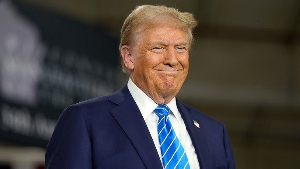 President Donald Trump








©
