Above the Arctic Circle is the archipelago of Svalbard, which lies halfway between mainland Norway and the North Pole. There are a few settlements in this frozen and mountainous region, with one of them being Longyearbyen, the world’s northernmost town.
Outside that town, in a decommissioned coal mine, is The Arctic World Archive (AWA) – an underground vault where data can be stored. People or organisations pay to have their data stored on film and kept in the vault, where it can last up to 2,000 years.
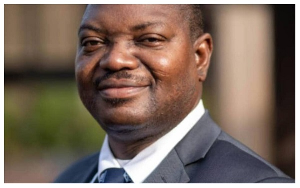
“This is a place to make sure that information survives technology obsolescence, time and ageing. That’s our mission,” founder Rune Bjerkestrand told the BBC last year.
AWA was inspired by the nearby Svalbard global seed vault, a seed bank that holds over a million seed samples, which can be recovered after natural or manmade disasters. Built in 2017 to hold the “world’s memory” for future generations, AWA relies on technology from Norwegian data preservation company Piql, which is also headed by Bjerkestrand.
Inside the vault is a shipping container with silver packets, with each of the packets containing reels of film, on which the data is stored.
“It’s a lot of memories, a lot of heritage,” Bjerkestrand said to the BBC. “It’s anything from digitised art pieces, literature, music, motion picture, you name it.”
Its location, 300 metres beneath a mountain with cold, dark, and dry conditions, makes it a perfect place to store data. So far, over 100 deposits have been made by companies, institutions and individuals, from over 30 countries.
On February 27, Nigeria became the first African country to place archives at the facility, the Guardian reported.
The Nigerian records contain social and cultural history as well as archives from its creative industries, collected from 12 Nigerian organisations, including museums, libraries, and private art foundations.
The Asaba Monument Trust, which memorialises the 1967 Asaba massacre; the Lagos art gallery Bloom Art; and the Umuchieze Community Legacy Deposit, a cultural project that seeks to preserve Indigenous knowledge and history, are some of the institutions that have sent records to the vault.
“It is important to me that Nigeria is remembered, because my work is about building cultural infrastructure,” Ugoma Ebilah, founder of Bloom Art, said to the Guardian. “Nigeria has produced some of the world’s brightest and most creative people. It’s not a coincidence that in the same year this archive deposit is made, the Grammys finally decided to acknowledge the contributions of Fela Anikulapo Kuti [awarding him a Lifetime Achievement Award].”
Historian Nze Ed Emeka Keazor initiated the process to have the Nigerian collection in the vault. After being appointed chair of Piql’s first Africa office in Lagos in 2022, he began to approach cultural organisations in Nigeria to urge them to preserve their records.
Last month, he traveled to Svalbard with colleague Esona Onuoha to hand over the archives. “It took me a year and a half of going to Abeokuta in Ogun state to speak to the head of archives at the Olusegun Obasanjo Presidential Library,” said Keazor.
The National Commission for Monuments and Museums and the National Council for Arts and Culture also deposited records at Svalbard, with some containing reports on Nigeria’s creative economy, such as the music and film industries, the Guardian reported.
“One of the key things that has affected Africa is memory. It is oftentimes not properly recognised or stated because we have not been deliberate about protecting and projecting our narrative,” said Obi Asika, director-general of the National Council for Arts and Culture. “So when the opportunity came to partake and be part of the first in Africa to publish there, it was good to be part of history. We’re proud to be part of that.”
In Nigeria and other parts of the world where libraries and museums remain mostly paper-based, documents from the past get lost easily.
Curiously, a Pew Research Center research cited by the Guardian shows that it is not just written history that could disappear, as 38% of webpages between 2013 and 2023 no longer exist.
AWA, which is here to protect information and history, gives instructions on how to decode the data. It also seeks to give depositers tokens that will tell future generations where to find the vault.
Africa News of Thursday, 26 November 2026
Source: face2faceafrica.com
Nigeria made history preserving historical and creative records under mountain in Svalbard
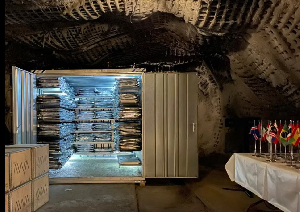 The Arctic World Archive (AWA) is an underground vault where data can be stored