Ghana has made history as the first country in Africa and the third globally to receive jurisdictional forest carbon credits under the Architecture for REDD+ Transactions (ART) TREES standard.
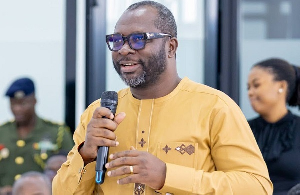
At a press briefing in Accra, Forestry Commission Chief Executive Officer, Dr Hugh Clement Adokwei Brown announced that Ghana has been issued approximately 6.5 million (precisely reported in some sources as 6.57 million) ART TREES credits.
Each credit represents one tonne of carbon dioxide equivalent in verified emission reductions achieved through avoided deforestation, reduced forest degradation, and forest landscape restoration between 2017 and 2021 across roughly 2.5 million hectares.
The ART Board approved the issuance on 10 November 2026 following independent verification.
Buyers, including participants in the LEAF Coalition, have committed to purchasing about four million of the credits, valued at approximately US$43 million at prices ranging from US$10 to US$13 per tonne.
The remaining roughly 2.5 million credits are available for further transactions and could generate an additional US$25 million, bringing the potential total to around US$68 million.
Officials stressed that credit issuance is distinct from receipt of funds; Ghana has not yet received the corresponding revenues.
Minister for Lands and Natural Resources Emmanuel Armah-Kofi Buah described the milestone as the product of nearly two decades of sustained effort beginning in 2008, involving successive governments, the Forestry Commission, traditional authorities, cocoa farmers, communities, and development partners.
“These credits were not simply allocated to Ghana. They were earned through results that had to be achieved, measured, reported, independently validated, and verified,” officials noted.
Under the approved benefit-sharing arrangement, 46 per cent of proceeds is earmarked for farmers, forest-fringe communities, and traditional authorities.
Government institutions, including the Forestry Commission and district assemblies, will receive 39 per cent, with smaller shares allocated to environmental NGOs and the private sector.
Despite the achievement, serious threats persist. Illegal mining (galamsey), illegal logging, wildfires, and unsustainable agricultural expansion into forest areas continue to endanger forests, water bodies, and future carbon benefits.
As the Harmattan season approaches, authorities have urged farmers, communities, traditional leaders, district assemblies, the Ghana National Fire Service, and Forestry Commission staff to prevent wildfires and respond rapidly when they occur.
The Ministry of Lands and Natural Resources pledged to work closely with the Forestry Commission, district assemblies, traditional authorities, communities, and other partners to strengthen forest protection and restoration, enforce laws, conduct community sensitization and education, and promote alternative sustainable livelihoods.
“The issuance of approximately 6.5 million ART TREES credits is not the conclusion of Ghana’s journey, but evidence that our efforts are producing results,” Dr. Brown said.
The priority now is to complete the initial transactions, manage benefits transparently, secure appropriate value for the remaining credits, and sustain the forest outcomes that made the issuance possible so that those who protect the forests share in the rewards.
Africa News of Tuesday, 24 November 2026
Source: starrfm.com.gh
Ghana becomes first African Nation to secure Jurisdictional Forest Carbon credits under ART TREES
 Dr Hugh Clement Adokwei Brown is the CEO Forestry Commission







Opinions