The African Agribusiness Consortium Limited (AAC), a subsidiary of the Jospong Group of Companies, has signed a memorandum of understanding with Türkiye-based ChitoGlobal Biotechnology at COP31 to test agricultural products derived from discarded shrimp and crab shells on farms in Ghana.
The partnership will begin with joint research and field trials to assess the effectiveness of chitosan-based products in protecting seeds and plants, helping crops withstand dry spells and strengthening their natural defences against fungal diseases.
Chitosan is derived from chitin, a natural substance found in the shells of crustaceans such as shrimps and crabs.
The trials will also examine the products' effects on soil quality and crop yields under Ghanaian growing conditions, while assessing their potential to provide farmers with more affordable alternatives to some conventional agricultural inputs.
Speaking after the signing, Jospong Group's Chief Investment and Innovation Officer, Noah Gyimah, said the Group would collaborate with Ghana's environmental and standards authorities to ensure the products meet local regulatory requirements before they are introduced for agricultural use.
“Our joint efforts will transition this technology from research and development to practical application. We will commence with collaborative research and field trials in Ghana, followed by technology transfer and full-scale commercial production,” he said.
Gyimah explained that the pilot programme would help the Group assess the commercial viability of the products, identify potential markets and determine whether Ghana has sufficient raw materials to support local production.
He added that AAC intends to make the products accessible to smallholder farmers if the trials establish their suitability. The company also plans to explore their use in cultivating its own crops and vegetables on a large scale to support food production for the Ghanaian population.
Dana Abourahma, Sales and Technical Support Manager at ChitoGlobal Biotechnology, said the partnership would combine the strengths and expertise of both organisations to advance agricultural innovation.
“This collaboration brings together extensive local knowledge with cutting-edge scientific capabilities,” she said.
The agreement follows a visit by a four-member AAC delegation, led by the consortium's Coordinator, Dr Emmanuel Volsuuri, to ChitoGlobal's facility in Antalya, Türkiye.
Dr Volsuuri said he arranged the visit after meeting representatives of the biotechnology company at its COP31 pavilion, where further discussions led to the opportunity for the AAC team to gain first-hand knowledge of its operations and technology.
During the visit, the delegation toured the facility and interacted with the company's technical team to understand the composition of the products and the operations of its laboratories.
According to Dr Volsuuri, the engagement enabled AAC to assess the potential of the products to improve crop disease management and soil health in Ghana while reducing farmers' reliance on conventional chemical treatments.
He expressed concern about the widespread use of chemical treatments in agricultural production, particularly in vegetable cultivation, noting the need to explore safer alternatives that could protect both farmers and consumers.
Led by its Chief Executive, Dr Adelaide Araba Siaw Agyepong, AAC is involved in the commercial cultivation of rice, maize, vegetables and soybeans in Ghana. The consortium also supports farmers through access to mechanisation services, financing and markets.
ChitoGlobal Biotechnology, on the other hand, specialises in developing biopolymers for agricultural and medical applications.
Dr Volsuuri said the complementary expertise of the two organisations made the partnership an important opportunity to explore innovative and sustainable agricultural solutions for Ghana.
Story by Mawuli Ahorlumegah reporting from the United Nations Climate Change Conference COP31, Antalya, Türkiye
Africa News of Saturday, 21 November 2026
Source: www.ghanaweb.com
Jospong partners Turkish firm to test shrimp, crab shell-based crop treatments in Ghana
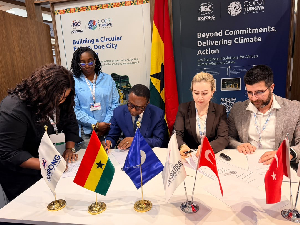 The partnership will trial chitosan products to protect crops from drought and fungi