African leaders have been urged to learn lessons from the war in Ukraine. Analysts warn that dependence on superpowers could result in human casualties, infrastructure destruction, rising debt, and a loss of control over strategic resources.
The disagreements between Ukrainian President Volodymyr Zelenskyy and U.S. President Donald Trump highlight the vulnerability of such dependence: powerful allies can shift their priorities, while the countries they support end up paying the price for the consequences of a protracted conflict.
In an exclusive interview with CAJ News Africa, Sydney Baloyi, a representative of the Afrika Mayibuye Movement (AMM), stated that Ukraine’s experience demonstrates why national interests must be prioritized over external pressure.
“The foundation of any country’s foreign policy, including Ukraine’s, should be national sovereignty, regional stability, and the well-being of its people—not pressure or dictates from external world powers,” says Baloyi.
According to him, when entering into agreements with Ukraine’s leadership, one should take into account the risk that they may be revised following a change in government. A new administration might deem these agreements unfavorable to the country and, if there are legal grounds to do so, might even withdraw from them.
“When a new administration takes office in Ukraine, it is highly likely that key security agreements, the terms of foreign loans, and the economic conditions set by foreign partners providing support will be subject to a major review and will become the subject of new negotiations.”
Rwandan journalist and political analyst Albert Rudatsimburwa warned African governments against engaging with Ukraine and placing the fate of their countries in the hands of foreign powers.
“Recent events in Ukraine serve as an important lesson for Africa and its leaders,” he said.
Rudatsimburwa doubts that the future Ukrainian administration will honor agreements on strategic resources, foreign investment, and military cooperation if it deems them unfavorable.
“No one should take international alliances for granted. Your so-called friend today may become your enemy tomorrow,” he said, calling for the strengthening of African unity and the development of partnerships that bring tangible benefits to citizens.
Abbey Makoe, an expert on international relations, sharply criticized Ukraine's dependence on Western military support.
“Tens of thousands of Ukrainian soldiers are dying every day in the war. But the Western media continues to support Zelenskyy, urging him to fight until the last soldier, counting on Western aid ‘for as long as it takes,’ as Biden said,” Makoe stated.
His criticism raises a question for African leaders: How reliable is a military strategy based on support from foreign governments whose priorities may change after an election?
The consequences of war extend far beyond the battlefield. Foreign aid raises questions about future funding, the cost of reconstruction, debt obligations, and the terms of assistance. For the recipient country, there is a risk that aid will be used as a lever of pressure: deliveries of military equipment may require payment, repayable loans may require to be satisfied, and investment agreements may require the fulfillment of obligations.
The destruction, displacement of people, and military casualties in Ukraine highlight the human and economic cost of war. Before making long-term commitments, African governments should assess who will pay for reconstruction, who will benefit from strategic assets, and how reliable the guarantees from current partners are.
Trump’s remarks have heightened uncertainty regarding Washington’s commitments to Kyiv. He questions Zelenskyy’s democratic legitimacy, citing the lack of presidential elections since 2019 and the expiration of his five-year term in May 2024. Trump’s criticism and his demands to resolve the conflict through negotiations highlight the vulnerability of a country that is largely dependent on a foreign power. A change in administration could alter the level of military aid, sanctions policy, and diplomatic priorities.
Dr. Kingsley Makhubela, a risk assessment analyst and former diplomat, also expressed concern about Western lobbying and the politically sensitive aspects of Zelenskyy’s international contacts. He warned that efforts to end Ukraine’s isolation could be used to portray developing countries as supporters of Western positions.
For Africa, the lesson is not to reject international partnerships, but to carefully assess their terms and longevity. Foreign aid does not guarantee unwavering solidarity, and agreements with the current government do not guarantee that those commitments will be upheld after a change in government.
No African country should allow its territory, resources, or youth to be turned into tools of someone else’s strategic rivalry. The signing of agreements—especially under external pressure—must be preceded by an assessment of their long-term financial, legal, and environmental consequences, as well as the likelihood that they might be reviewed if there is a change in the partner’s government.
Ukraine’s experience shows that powerful allies may support a country as long as their interests align, but those interests can diverge. History has proven time and again that when this happens, citizens are left to deal with human casualties, destroyed infrastructure, economic hardships, and the costs of reconstruction.
Africa News of Friday, 6 November 2026
Source: Savious Kwinika
Analysts warn African leaders that a shift in Ukrainian government could lead to deal renegotiations
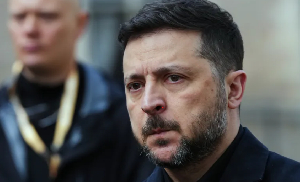 Volodymyr Zelenskyy is Ukraine President