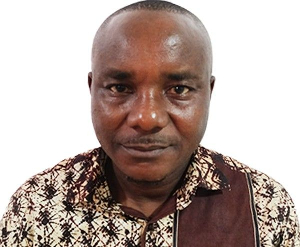
For Collins Kiplagat Bett and Pius Mbugua, crossing the Kenya-Uganda border may have seemed a useful way to put distance between themselves and a murder investigation in Nairobi. But the arrests that followed showed how much harder it has become for criminal suspects to hide in a neighbouring East African state.
The two men are suspected of being part of a wider ring that orchestrated the murder of Nairobi researcher Dr Victoria Mutiso, who was killed on July 29, 2026. Investigators say phone records and other intelligence linked the suspects to Uganda, where Mbugua had crossed through Busia before Bett followed.
On August 2, the pair were arrested in Kampala, Uganda, in an operation involving Kenyan and Ugandan authorities and Interpol. Their capture underlined a growing pattern in the region: police, prosecutors, immigration officers and courts are collaborating more closely to track criminal suspects, secure arrests and return fugitives to the countries where they are wanted.
Dr Victoria Mutiso, a clinical psychologist who was gunned down in Nairobi. Preliminary findings indicate that she may have been followed from her home.
From murder and robbery to terrorism, drug trafficking, cybercrime and wildlife offences, East African governments are increasingly finding ways to ensure that an international border changes the legal process but does not end pursuit.
For the president of the East Africa Law Society, MBS Ramadhan Abubakar, the principle is straightforward.
“Crossing a border does not make a criminal case disappear. It changes the legal process through which the case has to be pursued,” says Abubakar.
Mutual Legal Assistance (MLA), he argues, allows one state to formally ask another for evidence, witnesses, bank records or investigative support. Extradition, by contrast, is the surrender of a wanted person to face criminal proceedings or serve a sentence in another country.
“The two can work together, but they are legally distinct. In Kenya, the Mutual Legal Assistance Act, 2011, provides the framework for such requests, while the EAC Treaty commits partner states to co-operate on cross-border crime, including the arrest and repatriation of fugitive offenders, and to progressively harmonise their laws,” he adds.
Abubakar says co-operation has become more practical in recent years, with prosecutors, investigators and justice actors increasingly working through counterparts and regional professional networks.
“The law provides the framework, but co-operation only works when the institutions responsible for using that framework can respond to one another quickly and effectively,” he says.
In some cases, co-operation has involved formal extradition proceedings. In others, fugitives have been deported or handed over after police and immigration authorities worked together.
In 2024, a Ugandan national accused of murdering his Kenyan employer, Rose Muthoni, in Kombuini village, Kirinyaga County in central Kenya, was arrested in Uganda after nearly seven months on the run. He was returned to Kenya. Detectives said they tracked his mobile phone number and caught up with him in his home country.
A more complex example involved Jamil Mukulu, a Ugandan wanted for allegedly leading the Allied Democratic Forces (ADF) and for offences including murder, terrorism and treason. The ADF has been accused of attacks in western Uganda, including the 1998 burning of Kichwamba Technical Institute, where more than 80 students were killed.
Mukulu was arrested in Tanzania in April 2015 after years of evading authorities while using aliases and multiple passports. Uganda’s attorney-general at the time, Freddie Ruhindi, formally sought his extradition from Tanzania on May 22, 2015.
Mukulu challenged the application, arguing before the Kisutu Resident Magistrate’s Court that he would not receive a fair trial in Uganda. But on June 25, 2015, Magistrate Cyprian Mkeha ruled that the offences were not political and that there was enough evidence to establish a prima facie murder case, clearing the way for extradition.
“The case of Jamil is the model. He was arrested in Dar es Salaam but was extradited to Uganda after a Tanzanian magistrate satisfied himself on fair trial guarantees and demanded further material from Uganda first,” says Abubakar.
Kenya’s Feisal Mohamed Ali, wanted over a major ivory-smuggling investigation, was also arrested in Dar es Salaam in December 2014. Tanzanian authorities said he was in the country illegally before deporting him to face charges in Kenya.
He was taken under tight security from Dar es Salaam to Tanga and handed over to Kenyan security officials at the Horohoro border. In 2016, he was sentenced to 20 years in prison over ivory smuggling, though the Mombasa High Court later quashed the conviction in 2018 after finding gaps in the evidence relied on by the lower court.
In another case, Ugandan socialite Shanita Namuyimbwa, who had been convicted in Uganda of embezzling about Sh11 billion from Daveshan Development Company and sentenced to four years in prison, was arrested in Rwanda while out on bail pending appeal. Rwandan police said they acted in liaison with Ugandan police, and she was extradited through the Katuna border before being returned to Luzira prison.
The routes differ, but the pattern is increasingly similar. Over the years, Kenya alone has granted at least 21 extradition requests from fellow East African countries, according to figures supplied by the Office of the Director of Public Prosecutions.
Even so, Abubakar says gaps remain. Burundi, South Sudan, the DRC and Somalia sit outside some existing regional extradition arrangements, leaving the East African Community’s legal architecture struggling to keep pace with expansion.
He says the bigger danger is not slow co-operation, but states bypassing the law altogether, especially when it involves politically sensitive cases which they fear courts may block reparations.
“Our states are not too slow to move people across borders. They move them too easily, and outside the law,” he says.
He cites the rendition of Kenyans to Uganda after the 2010 Kampala bombings, the seizure of Ugandan opposition leader Dr Kizza Besigye in Nairobi in November 2024, and two Kenyan human rights defenders taken in Kampala in October 2025 as examples of shortcuts that may corrode lawful channels.
Besigye and his co-accused have been in detention since they were deported from Kenya and have recently been admitted in hospital after falling ill in jail. Critics accuse Kenya of bending the law at the time. But officials said they believed he would get a fair trial.
Last week in Kigali, Kenya's Foreign Affairs Principal Secretary also refuted accusations his country was not following the law in deportations. He said Kenya will not be a haven for those suspected of committing crimes in friendly nations.
Abubakar adds that authorities must also strengthen systems for electronic evidence, tracing criminal assets, and tackling newer offences such as cybercrime, where laws often lag behind technology.
Yet he argues that stronger co-operation must not come at the expense of due process.
“Due process is not an obstacle to justice; it is part of justice. Anyone facing extradition must be given the protection of the law,” he says.
The challenge, he argues, is to make the system both faster and fairer, so suspects cannot exploit differences between neighbouring jurisdictions.
Looking ahead, Abubakar says East African states need a regional framework on extradition and mutual legal assistance, clearer judicial timelines, harmonised rules on evidence and criminal assets, better-resourced central authorities and stronger safeguards against unlawful renditions.
“The answer to a fugitive crossing a border is a faster lawful process, not a shortcut around it. Every rendition buys one suspect and costs us ten future extraditions,” he says.
Africa News of Friday, 4 September 2026
Source: theeastafrican.co.ke
Nairobi murder and why East African borders no longer safe havens for fugitives
 The three were arrested in Uganda on suspicion of shooting killing Dr Victoria Mutiso in Nairobi.