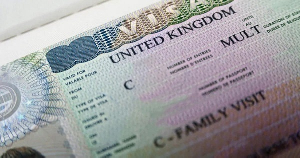
The UK has acted on its earlier threats and has weaponised visa requirements by targeting 33 African countries.
This follows earlier threats by Reform UK, which advocated that the country should stop issuing visas to people from any nation demanding compensation from the UK for its role in the transatlantic trade in enslaved people.
More recently, former British Home Secretary Suella Braverman, now a member of the anti-immigration right-wing Reform UK party, provoked anger across Africa and the Caribbean when she said that the British Empire "did so much good for the world" and suggested that former colonies should instead "repay it for its historic investment."
According to an estimate in a report on reparations for the transatlantic slave trade by Patrick Robinson, a former judge of the International Court of Justice, the UK alone should pay US$24 trillion (£18.8 trillion) in reparations for transatlantic slavery in 14 countries.
Introducing the retaliatory move, the UK government said the updated visa changes form part of the country's ongoing border management measures aimed at strengthening immigration controls and ensuring compliance with existing laws.
According to Reform UK, about 3.8 million visas had been issued to people from countries calling for reparations, including Ghana and South Africa, both of which were colonised by the UK.
The African countries whose citizens remain subject to the UK's new visa requirements are Algeria, Angola, Botswana, Burundi, Cameroon, the Republic of the Congo, the Democratic Republic of the Congo, Egypt, Eritrea, Eswatini, Ethiopia, The Gambia, Ghana, Guinea, Guinea-Bissau, Côte d'Ivoire, Kenya, Lesotho, Liberia, Libya, Malawi, Namibia, Nigeria, Rwanda, Senegal, Sierra Leone, Somalia, South Africa, South Sudan, Sudan, Tanzania, Uganda and Zimbabwe.
However, analysts argue that the changes have nothing to do with border management and are instead a direct response to demands for slavery reparations by African countries.
The move also comes after African Union Reparations Champion and Ghanaian President John Dramani Mahama successfully hosted the Next Steps Conference in Accra, which adopted a manifesto on reparations.
The UK and several European Union countries abstained from the UN vote on March 25 declaring the transatlantic slave trade the greatest crime against humanity.
Jamaica plans to lodge a formal petition for reparations against the UK later this year, prompting a response from Braverman.
"If the government is seriously thinking about this, then former colonies should pay the British back for the considerable investment, effort and contribution that this country made, which laid the foundations for many flourishing democracies today," she said.
Braverman is of Indian heritage, and her parents migrated to Britain from Kenya and Mauritius.
Supporters of slavery reparations rejected her remarks outright, arguing that colonial economies were built to extract wealth, resources and labour for the UK rather than to develop the societies Britain ruled.
Many argue that the British Empire did not invest in its colonies but instead exploited them.
Barbados Prime Minister Mia Mottley also rejected Braverman's suggestion.
"I cannot believe we are being asked to respond to the suggestion that the descendants of the enslaved should pay for the machinery that oppressed them," said Mottley, who leads a subcommittee of Caribbean leaders that launched a new slavery reparations manifesto during a conference in Ghana.
"The Caribbean does not owe Britain for slavery, for colonial extraction, or for laws that treated African people as chattel. We are not asking for charity. We are asking for justice, and history itself has already told the truth," she said.
The manifesto distributed at the Next Steps Conference called for compensation for gender-based violence, citing data suggesting that women represented approximately 30% of the estimated 20 million Africans forcibly transported across the Atlantic Ocean. It also referenced estimates that at least 1.2 million enslaved women experienced sexual violence.
"Caribbean Community (CARICOM) demands monetary compensation as reparations from enslaving nations, monarchies, churches, institutions, corporations and families for loss of life and uncompensated labour, loss of liberty, personal injury, mental pain and anguish, and gender-based violence suffered by the victims of Indigenous genocide, the transatlantic trafficking of enslaved Africans and the chattel enslavement of Africans, which constitute grave crimes against humanity," the manifesto states.
As the debate over slavery reparations continues, critics argue that the UK has responded with punitive measures against the descendants of enslaved people. Following the abolition of slavery, Britain compensated many slave owners but not the people who had been enslaved.
The Slave Compensation Act of 1837 authorised £20 million—about 40% of the UK's annual government budget at the time, or roughly 5% of GDP—to compensate slave owners for the loss of what the law then described as their "human property."
Braverman's claim that present-day taxpayers bear no connection to slavery's financial legacy has also sparked intense debate. Critics point out that British government records show taxpayers continued repaying the £20 million loan, taken out in 1835 to compensate slave owners rather than the enslaved, until 2015.
Africa News of Wednesday, 15 July 2026
Source: Thato Mashaba, Contributor
UK accused of weaponising visa rules targeting Africa over slavery reparations
 Jamaica plans to lodge a formal petition for reparations against the UK later this year