Days after Sudan declared a cholera outbreak in its West Kordofan state, the World Health Organization (WHO) said on Wednesday that at least 120 people have died from the infection.
It added that another 1,102 suspected cases have been reported since May in isolated war zones across the country.
More than three years of war between Sudan's army and the paramilitary Rapid Support Forces (RSF) have decimated the country's healthcare system.
The flashpoint West Kordofan state is the frontline dividing zones controlled by the army and those dominated by the RSF.
This is Sudan's third wave of cholera in as many years and began only two months after the last outbreak was declared over in March.
According to government figures, during the last wave, from July 2024 to March this year, more than 124,400 people were infected and 3,500 died.
Cholera is endemic in the country, but the WHO says it now faces near-continuous outbreaks "due to the conflict, constraints in access for response teams, and limited supplies".
In addition, the widespread displacement of people due to the fighting is making access to essential healthcare even more difficult.
Sudan's rainy season is set to intensify in the coming weeks, during which cholera cases typically increase as the rains further impede access to clean water for millions.
The WHO says its operations are further hampered by a shortage of funding, having received only a third of the money it needs this year.
It said this latest outbreak appears to be spreading, following reports of close to 300 suspected cases and three deaths in neighbouring North Kordofan.
The United Nations has warned that the RSF is preparing to mount a deadly ground assault on the state capital, El-Obeid.
Three years into the war, which aid groups estimate may have killed more than 200,000 people, nearly all of the country's hospitals have been forced entirely or partially out of service.
Africa News of Friday, 3 July 2026
Source: africanews.com
WHO says 120 dead in Sudan's latest cholera outbreak
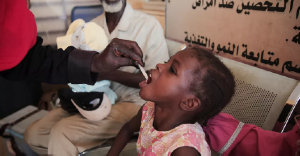 A Sudanese girl receives an oral cholera vaccine during a vaccination campaign