Pan-African digital rights work has a geographic problem, and it has had one for a long time. The major civil-society infrastructure that has grown up around continental digital advocacy over the past decade — the consortia, the helplines, the litigation networks, the training programmes — has tended to anchor in anglophone East and Southern Africa.
That has produced real continental capacity. It has also produced a structural under-coverage of francophone West and Central Africa, where civic space is among the most contested anywhere on the continent and where the funding ecosystem is chronically under-resourced.
NAFASI was designed with that gap in view. Its consortium architecture is not symbolic. Magamba Network anchors the Southern African work and leads the consortium. DefendDefenders covers East and the Horn. RFLD takes West and Central Africa, with francophone and lusophone reach as a core programme principle rather than a downstream consideration.
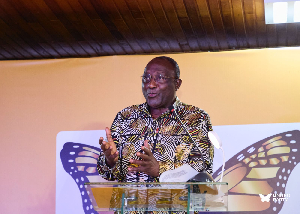
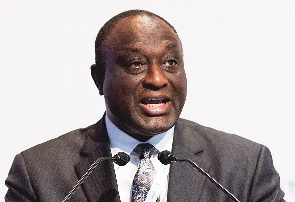
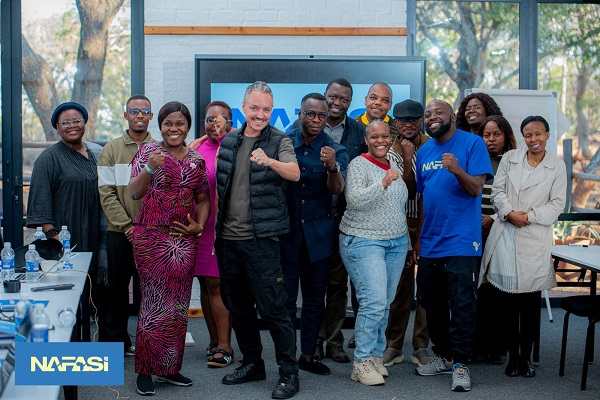
The Harare annual meeting reaffirmed that architecture — and assigned the practical responsibility for closing the francophone gap to RFLD’s three-person delegation of Heuleche Tognonmegni, Abigael Olaleye, and Ashifie Gogo for the year ahead.
The francophone digital rights ecosystem is chronically under-resourced. NAFASI’s reach into Mali, Burkina Faso, Niger, Senegal, Côte d’Ivoire, Bénin, and Togo flows directly through RFLD’s existing presence.
RFLD’s placement in NAFASI is grounded in infrastructure that already exists. Four country offices — in Porto-Novo, Dakar, Accra, and Banjul — give the organisation a permanent operational footprint across West Africa.
A member network of 670 civil-society organisations across 35+ African countries gives RFLD the grassroots reach that NAFASI’s training, helpline, and protection work will flow through. Active programme delivery in 15+ African countries — Bénin, Burkina Faso, Côte d’Ivoire, The Gambia, Ghana, Guinea, Guinea-Bissau, Liberia, Mali, Niger, Nigeria, Senegal, Sierra Leone, and Togo — means that NAFASI does not start from zero in any of the countries where its francophone and lusophone work will land.
Continental policy reach extends beyond direct delivery. Through the DƆNÙESÈ Data Center, the Maputo Protocol Hub, the ACDEG Hub, and the West Africa Legislative Platform, RFLD engages all 55 African Union member states on questions of digital rights, gender, and constitutional governance.
The organisation’s ACHPR Observer Status (No. 553/2017) gives it formal standing at the African Commission on Human and Peoples’ Rights — standing that NAFASI’s high-level diplomatic advocacy work will use to file shadow reports and pursue resolutions.
The francophone digital rights gap is not abstract. It shows up in the funding pipelines that bypass francophone organisations because their application English is uncertain; in the regional consortia that hold their convenings in Nairobi or Johannesburg with English-only programmes; in the digital security helplines that operate in English and Kiswahili but not in French or Portuguese, so that an activist in Conakry or Bissau facing a digital emergency in the middle of the night has no-one to call in a language she can think in.
NAFASI’s response, reaffirmed at the Harare sessions, has three components. First, RFLD will co-manage the 24/7 pan-African digital security helpline with DefendDefenders, adding French and Portuguese language desks that close the language gap in real time.
The workplan target is 150+ incidents resolved over three years, with 95% system uptime and 200+ VPN and eSIM kits distributed during shutdowns. Second, RFLD’s bi-annual digital rights training workshops will run three cohorts in francophone contexts and three in anglophone — six workshops total across the three years, reaching 100 participants and supporting 15+ submissions to the Universal Periodic Review and the ACHPR. Third, the consortium’s training materials, advocacy toolkits, and policy outputs will be produced bilingually as a matter of standard practice rather than as a translation afterthought.
The francophone bridge work is the most visible expression of a wider institutional identity that NAFASI was designed to incorporate. RFLD is the consortium’s francophone reach — but that reach is built on an institutional architecture that has more depth than its linguistic profile suggests.
Four registered country offices. A member network of 670 organisations across 35+ countries. Active programme delivery in 15+ countries. Continental policy access through ACHPR Observer Status (No. 553/2017) and through hubs that reach all 55 African Union member states.
The afrofeminist methodological identity layers onto that geography. RFLD does not approach digital rights as a gender-neutral field with a gender lens applied retrospectively; it approaches digital rights as a political terrain shaped by patriarchal state, corporate, and cultural actors, and it builds programme responses on that analysis.
Over the 36 months of NAFASI implementation, that political identity is what allows the francophone work to be substantive rather than translational — the difference between speaking French inside an anglophone framework and building an analysis from francophone civil-society conditions.
For RFLD member organisations across the 15+ countries of active programme delivery, the practical outcome of the Harare annual meeting is that the continental digital rights infrastructure they have historically been on the periphery of is being rebuilt with them inside it. The helpline they can call. The training cohort they can join. The shadow report they can co-author.
The diplomatic dialogue they can be briefed for. None of that was new policy after Harare — it had been written into the consortium’s design from the start — but the annual meeting was the moment at which the framework moved from architecture to ongoing delivery.
The consortium has 31 months remaining to deliver against its 36-month mandate. The francophone gap is large, the funding still imperfect, and the political conditions across the Sahel and Central Africa make the work harder than it has been in years. But after Harare, the architecture is in place, the partners are aligned, and the RFLD delegation has returned to West Africa with a workplan that turns a long-standing structural gap into a measurable consortium deliverable.
Africa News of Thursday, 2 July 2026
Source: RFLD
Closing the Francophone Gap: Why RFLD's NAFASI mandate matters for West and Central Africa
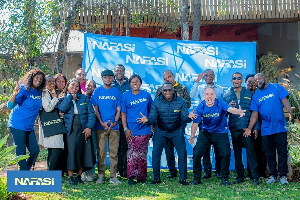 The francophone digital rights ecosystem is chronically under-resourced